Posts Categorized: Posts

Interviews

Two interviews, one in podcast form, another via email, in which young musicians ask me my thoughts about music and life, because I am now an old man:

  1. Jeremiah Tabb‘s Hype Harmony Podcast, episode 11. Available at the Hype Harmony website or on iTunes (or anywhere else fine podcasts are to be gotten.)
  2. An email interview with a former student of mine from Cincinnati who is now an undergraduate student at DePaul University. The interview was part of a project for an arts management class about musicians who manage their own careers. A condensed version of my responses:
What traits do you find most valuable about yourself when you are in a leadership position?

The two characteristics that I try to bring to every project or position are positivity and communication.

Positivity  means believing that everyone participating in the team has an important contribution to give, no matter how large or small, and treating everyone with respect and holding them to high expectations. It means setting a positive example in terms of preparation and behavior, and not engaging with negativity or gossip. Having a good attitude isn’t good enough – you also have to avoid succumbing to a bad one.

In the world of orchestral music, where everyone wants to have an opinion and backstage gossip is rampant, this is especially important. A friend of mine who has had a ton of success in his orchestral career told me it’s better that people think you’re dumb than that they think you’re negative, and I believe he’s right.

All of that positivity isn’t worth anything unless it’s communicated effectively. It’s important that everyone on your team understand the goal of the final product. The better each individual understands the common goal, the more chance there is that he or she can suggest a strategy that you might not have thought of, and that’s always a good thing. You’d be surprised how much, say, a stagehand knows about programming, or a violinist knows about concert venues.

The other thing that’s good about getting everyone on the same page is that you can then trust the members of your team to advance the project among themselves. I’m not a fan of chain-of-command (in which everyone has to report up to their superiors, who then confer to solve a problem.) If people have a problem, they should communicate directly with the person who can help them solve it.

Two leadership qualities that are particularly necessary for conductors are vulnerability and thick-skinedness. To make music with your fellow artists, you have to reveal your inner nature, and that kind of vulnerability takes a lot of courage. And as I mentioned before, orchestral musicians love nothing more than to criticize the person waving the baton, and that criticism will inevitably find its way it back to you. It takes a lot of bravery to keep exposing your emotional core when you know that some musicians might think you’re being silly or ridiculous or shallow.

Do you have a particular philosophy or style when marketing yourself or your ideas/works?
Marketing my works

When it comes to marketing my works, I have a very specific strategy, and it’s tied to how and why I create them in the first place (at least, the ones I’m writing for market, as opposed to on commission or out of sheer inspiration.)

What I’m trying to do is help performers solve a problem. It could be that a conductor is trying to fill a slot on a thematic program (“Nature” or “Italian voyages”) and they need a seven-minute concert opener that starts soft and ends loud. Or maybe there’s an instrument that doesn’t have much solo recital repertoire and there’s a chance to write a big sonata. Or perhaps there’s an unusual combination of instruments that’s only rarely been assembled into a piece (for example, I’ve recently written works for tuba + marimba, and viola + horn + piano.)

Marking myself
The best investment I ever made into marketing myself was to spend good money on an excellent web site design. My web site was designed by a friend of mine who is also a musician/composer, so she understood what my needs were, and we collaborated closely on the design (as we have on subsequent updates.) I’ve always gotten positive feedback on the website, and it’s been a great calling card.

I’ve tried to develop rigorous posting habits on social media, but I never really stick with them. But I don’t think many classical musicians gain followings via the internet. Rather, I’ve concluded that it works the other way around – it takes a LOT of real world success to become an internet celebrity as a composer or musician (for example, John Mackey wouldn’t have nearly as many twitter followers if his work wasn’t regularly programmed by schools all over the place.)

Have you had any significant obstacles in your career? If so, how did you overcome them?

There are probably a thousand little slights and missteps that, if you’d asked me about them at the time, I would have said were major setbacks or obstacles or mistakes. But looking back on things from a distance, I can say that my career has mostly been pretty smooth. For example, when I was finishing up my master’s degree and applying for jobs, I got rejected by every orchestra I applied to.

That was a huge blow at the time. It meant that I had to take a year off from conducting. But during that year I worked a lot of my connections and got commissions for compositions, and on my next round of applications, I wound up with my gig in Cincinnati. So it was one year later than I had desired – in the big scheme of things, it hardly matters, and it was probably better for me to face a little adversity, because I had to strengthen the other areas of my career.

Another reason it’s hard for me to answer that question exactly is because I feel like my career has taken me where I was supposed to go, even if it wasn’t necessarily where I had set out for. I think it’s tremendously important to be able to identify one’s strengths and accept one’s weaknesses. Because of our culture of celebrity worship, we all think we ought to be big stars, but it’s not necessarily what’s best for us, or what we should be doing.

Is there a particular direction you would like to see music go in the next 5 years?

I suppose the thing I’d like to see more of is groups like the Danish String Quartet, who play the standard repertoire as well as their own arrangements of Scandinavian folk music. What I like about them (and what I think could be paradigmatic) is that they bring a real musical intelligence to their arrangements, taking from some of the best trends in folk music, New Music, classical music, and pop music.

They have a collaborative approach to creating these arrangements, more akin to a rock band. I like the idea of performers making music their own and creating a personal repertoire that’s different enough to be interesting, but that uses the best materials available to build upon.

What tips do you have for keeping classical music accessible and topical?

What I think will make ‘classical music’ relevant is having more new ‘classical’ music. And by that, I mean music that follows in the tradition of Brahms, Mahler, Stravinsky, Rachmaninoff, Debussy, Ravel, and Sibelius.

Most of the new music performed by orchestras and professional chamber ensembles today is termed “New Music”, and I would define that, for the most part, as consisting of a genre separate from ‘Classical Music’. ’New Music’ largely follows a line from Schoenberg to Stockhausen and the high modernists to the academic composers of today.

I don’t begrudge anyone their enjoyment of whatever kind of music they like, and I do not begrudge any creators their right to create whatever kind of music they want. But there are many people who genuinely love western classical music (the sort of music that stretches, say from 1600-1910 in Europe) and most of those people would be more than happy to hear new music written in that vein.

Yes, the standard repertoire has become stale through overexposure. But very little of the ‘New Music’ produced today satisfies listeners who are interested in the classical repertoire, and it’s not because they don’t want to hear something new. Most of them are dying to hear something new. But they want to hear something new in the genre that they enjoy.

If you have anything else you wanted to add, please feel free.

Some important personal qualities that fall outside the scope of what’s needed for a leadership role, but that are very important to any working musician:

• Discipline. When there’s nobody around to hold you to a schedule, you have to create a schedule and hold yourself to it. Especially when you’re doing well as a musician, you can’t allow yourself to get so busy that you skimp out on time for practice or composition. I find that a very regular routine – going to bed and waking up at the same time every day, taking my meals at the same time, eating the same things – is essential when you work for home. It’s also important to be sure you make time for health and physical activity, because nothing could be more detrimental than sitting in one place all day.

• Timeliness. This doesn’t just mean being on time to rehearsals (though that is very important.) It means not putting off until this afternoon what you can do this very minute. I try to respond to every email in my inbox immediately, even if it’s just to let the recipient know that I’ll need some extra time to respond. Anything that I can do immediately I get done immediately, and I create time in my daily routine to attend to these smaller issues. This gives me a feeling of accomplishment and allows me room to spend the better part of my day deeper in thought: composing new pieces, conceiving of new projects, creating new programs, etc.

• Being nice. It is REALLY important to be nice to everyone you meet, even if they turn out to be jerks themselves. Better to avoid people that you have friction with rather than engage negatively with them. It’s also really important to be supportive of your colleagues, even if you’re competing for the same things (jobs, competitions, festivals) because these people will keep cropping up in your life, and it’s hard enough as a musician without backstabbing and infighting. Sometimes they’ll win, and sometimes you’ll win. It’s not always zero sum, and your life will be better if you maintain good relationships in the business.

• Joy. The other HUGE tip I have for musicians and composers is not always to think of your art in terms of your career. Take gigs that don’t pay anything sometime. Volunteer your time in a community group. Write pieces for your friends (or for yourself.) If you only think of your time and talents in commercial terms, you’ll wind up disappointed and out of practice and bitter. Yes, you should be compensated for your work just like anyone else, but a life in art is full of its own rewards, and it’s crucial never to forget that.

Lenny at 100

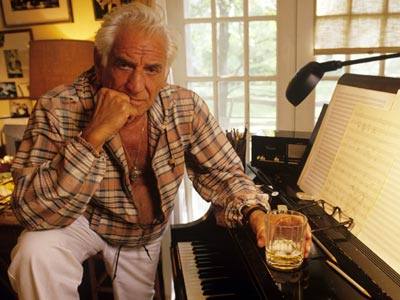
It’s Lenny’s birthday today, and not just any birthday, his hundredth.

Like so many other composers and conductors, I spent a large portion of my teens and 20’s totally in his thrall. I watched every concert and studied every documentary. I read all the books that he wrote and the ones that were written about him. I listened to every piece (some, like MASS, every day.)

I watched all the conducting footage I could get my hands on, dissecting and imitating the tiniest details of his gestural vocabulary. His conducting remains the foundation of my own technique, embedded in my body like a second set of bones.

I’m perfectly happy to acknowledge Lenny’s great gifts and his prodigious legacy and his lasting effect on my life and career. But I’m also convinced that he’s a lot more complicated a figure than anyone seems willing to grapple with as the celebrations roll in.

Lenny (and here I’m speaking from a mountain of substantiated accounts as well as rumor and gossip) was an egregious flirt, a serial philanderer, and a deliverer of unwanted attentions and advances. Like, Bill Clinton level. He traded on sex and he would do it with anyone. Which is why I’m surprised that amid all the pomp, Lenny seems to be the one person to have totally escaped any kind of critical reappraisal in the context of the #metoo movement.

Maybe it’s that we all agree that he was simply abiding by the mores of his era, that he had an understanding with his wife, and that we’re willing to look past the scuzz to see the genius. Perhaps, as Norman Lebrecht says, it was all ok because Lenny stayed attractive to the end, unlike James Levine who got ugly (!)

But I’m afraid that what’s more likely is that there’s an awful lot of money in “Bernstein at 100”, and nobody wants to grapple with the demons. It may be that everything Lenny did was consensual, but haven’t we learned that power clouds the picture when it comes to consent? Goodness knows there was nobody more powerful in the world of classical music.

So while I salute Lenny and marvel at his talents, I think we can also look at him as an example of someone who overstepped his boundaries sometimes, and we can try to hold ourselves to a higher standard, as much as we may stumble. I think it’s possible to hold to ideas in our heads at once, and to remember that he was human too, just like the rest of us.

A New Season

Well, it’s official: I’m a music director again. A full-time conductor at the helm of a performing organization. It’s a group in Seattle (well, two groups in one) called Orchestra Seattle and the Seattle Chamber Singers, an august institution fifty years in the making.

And what’s more, I’m extremely happy about it, though it was not obvious to me that I would again endeavor to fill such a role. For the past two years, I’ve been living the life of a full-time composer/orchestrator and a very part-time conductor. Before that I’d been a music director, an assistant conductor, and a music teacher, mostly all at the same time, and after five years of that, I thought it was time to focus on my composing career (writing / recording / promoting my own music, conducting and performing it, serving as a guest clinician, etc.)

But then this job came open, and it seemed like such an ideal match for my talents and goals that I couldn’t wait to pursue it. And it’s turned out to be true. OSSCS combines the best aspects of a professional, youth, and community groups. Its players and singers take their music-making very seriously and they operate at a pace that keeps things interesting but allows them to go deep into the music.

Programming-wise, it’s a kid in a candy shop situation for me; with a chorus and an orchestra that concertize together as one, the sky’s the limit. I can program a single concert with oratorio, a cappella, symphonic, concertant, and chamber music. It’s about making the most compelling music statement possible and expressing Big Ideas.

I wanted to do something really special for my inaugural season, so I’ve decided to present a retrospective of the music of Lili Boulanger. Here’s the season overview, and here’s a video I made laying out the concept and repertoire:

Of course being a music director comes laden with responsibility. A conductor is the focus of a community, a rabbi, a priest, a teacher, but also a scholar, and a dancer, and a performer. The best ones find a way to be simultaneously a celebrity hovering in the clouds and a mensch walking upon the earth.

A composer, on the other hand, is a kook living alone on an island who crafts meticulous messages and places them in delicate bottles and throws them into a vast, chaotic ocean. It’s a monk-like existence where you can live inside the sound world of your own imagination and not talk to another person for days at a time.

What I’ve found is that I need a little of both if I’m going to stay sane, and that’s why I’m so in love with this job. It roots me in an open-hearted musical community full of artistic possibility, while still allowing me to pursue the composing life of my inner weirdo. I consider myself awfully lucky to be in this situation and I can’t wait to get started.


Quality Musicians

I recently had occasion to visit my friend Stephen Campbell, professor of trumpet at Ball State University, and I noticed a great list he had created and posted on his door, which I share with you now:

Quality Musicians…

  1. understand where and how they fit in the musical fabric at all times.
  2. do what they can to make their work effective “in the hall.”
  3. realize that playing in a large ensemble demands even more clarity than performing with a smaller group.
  4. pace themselves during rehearsals and performances.
  5. remember that higher notes sound louder than lower notes. Longer notes also sound louder than shorter notes.
  6. don’t blast away in loud tutti passages, leaving themselves overly tired for solos or exposed passages.
  7. know to play softer and less aggressively in unison sections.
  8. play their best, regardless of who is on the podium.
  9. do not play as loudly as possible, even when the conductor asks for the same.
  10. are not defensive about suggestions from colleagues or the podium.
  11. do not take up valuable rehearsal time asking dumb questions.
  12. who are section leaders will be more effective with consistent playing rather than a lot of talking and gesturing.
  13. are always supportive and considerate of their colleagues.
  14. who are section players are more “chameleon-like” so as to be in a better position to follow the principal player and create a unified section.
  15. realize they may be “the problem.”
  16. always come to the first rehearsal prepared.
  17. are not born. We become quality musicians only through experience, honing our skills and instincts, and constantly listening.

Conductors

In about a month I’ll return to the Pierre Monteux School once again as Composer-in-Residence. Two projects are on the docket: a performance of my trio and the premiere of a new kids piece Carnival of the Animals: Maine Edition.

It’s a region-specific version of the old classic, so you’ve got movements like The Puffin, The Lobster, The Porcupine, The Eagle, etc.  In a nod to Saint-Saëns cheeky inclusion of “Pianists” in the original, I’ve included “Conductors” in my set.

Which brings me to my poem, which I’d really like you to read, because I am inordinately proud of it:

Conductors

Now we behold a rare sort of bird,
As odd as a duck and twice as absurd.
It thinks itself graceful, as smooth as a swan,
Look there in its wing: it holds a baton.

But unlike most others, this bird doesn’t sing,
It stands at the front and starts flapping its wing.
And lo and behold, musicians will play,
The Conductor will help them together to stay.

Conductor 1 starts full string section.

But observing this species while out in the field,
Some musicians will think that they’d rather not yield.
“A conductor direct me? What does she know?
Her style’s not learnèd and her tempo’s too slow!”

Conductor 2 starts inner circle strings; same music, half-step lower, faster tempo, senza vibrato. (Other strings stay with Conductor 1.)

But for others such methods are stuffy and prim;
Study and practice can strike them as grim.
“Students are eager, and they’ll think I’m cool.
Teaching’s the game – I’ll conduct in a school!”

Conductor 3 starts woodwinds; half-step higher, slower tempo, beginning band style (Orchestras 1 & 2 continue apace.)

Some others will think “I make a great host,
So I’ll give the crowds what they all want most.
Arrangements of rock, pop, and jazz – that’s my game;
There’s no way in the world that those could be lame!”

Conductor 4 starts brass; pops style. (Others continue as before.)

Then there are those who will spurn with derision
All music from the past, as lacking in vision.
“I’ll serve up the sounds that are loved by the few,
Bleak and discordant and aggressively new!”

Conductor 5 starts piano & percussion; high modernist style. (All others continue.)

What a mess, what a noise these birds have let loose!
I can’t take any more of this aural abuse!
There’s only one thing to do: I myself will try it
In the hopes of getting some peace and some quiet!

Narrator gives voracious cut-off. Musicians stop, conductors keep conducting.

Well there they go on, flapping their wings;
Thinking they rule over woodwinds and strings.
But musicians, I find, are always best led
By leaders who don’t let it go to their head.

Conductors realize; begin shouting at each other. Narrator cues a big unison ‘button’ to end the piece.

An experiment

I’ve just recorded a new little pièce d’occasion of mine, titled Dans les champs de Valensole, and in order to present it to the world, I’ve made two videos and uploaded them both to YouTube. The question is: which will the algorithm find more enticing?

The first one features me and Kevin performing “live” and featuring beautiful shots of the lavender fields of southern France:

The second features the rolling score:

I’ve posted them both in various places just to get the ball rolling. My mother thinks its insane that anyone would prefer to watch the score video, but I think she underestimates the popularity of the medium, or the number of classical music nerds who sit around and watch this kind of stuff all day.

I particularly wonder which cellists will prefer – to see the player in action, or to see what it is that he’s actually playing.

Only time will tell. I’ll share the results in a couple of months.

Of Danes and Strings

I finally got to hear / see the Danish String Quartet live a couple weeks ago. They played Beethoven and Bartok, music which they play very well, but I wouldn’t care if I heard them play the canon ever again. The deep spiritual core of the DSQ’s repertoire is their set of Scandinavian folk music arrangements.

How to describe these pieces? They are fiddle tunes that would sound familiar to anyone with an interest in Scottish reels or American bluegrass. They are fashioned into forms full of variety, spontaneity, and verve that function, emotionally and intellectually, as real pieces of music.

The style of the arrangements draws from the Italian baroque, French impressionism, modern pop and film score music, contemporary indie rock, and old fashioned jug band music. It’s hard even to parse the influences because they are blended so seamlessly into a coherent style, which, were I to hazard a name for it, I would call Cosmopolitan String Folk. (This would be a great name for the group itself if they ever decided to ditch the whole Danish thing.)

The music is arranged by the members of the quartet themselves, and as far as I’m concerned, that makes these gentlemen the leading composer-performers of the current generation. They perform with finesse and subtlety, both live and in person. They’ve got enough twang to make you feel country, and enough polish to make you feel urbane.

It’s hard for me to express how much I love this music, but here’s a go at it: the Danish Quartet’s Scandinavian folk arrangements are my platonic ideal of what new concert music should be. It’s music that is deeply connected to an ancient tradition, and that draws from the best styles and tools available from the history of music. The textures spring forth from the instruments themselves, and the music has been crafted by the hands of the performers.

I know the DSQ will continue to play Beethoven and Adès and Haydn, but if they ever give it up and just play full shows of the Scandinavian folk music, I’ll be first in line to buy a ticket.

Their albums in full on Spotify: Wood Works, Last Leaf

New bébé

I’m so pleased to present one of my latest pieces, a sonatina for clarinet and piano. I decided to make one of those YouTube score videos since those are all the rage these days (at least among me)

This was a case of writing something for a specific performer, a young clarinetist named Joseph Folwick, who played in the Metropolitan Youth Symphony during my year-long stint as conductor. Joseph was a technical wiz on the instrument, but more than that, his playing was full of a puckish vitality that I’ve rarely encountered. When he had a solo, he would interpolate licks from other pieces (“Rhapsody in Blue” during the “Cuban Overture” for example.)

He was always pushing the limits, trying to see how far he could go to make me laugh before I actually got pissed off. Even when we played my own music (the Mulligan Overture), he would play his part in different octaves and add freewheeling glissandi to the printed part. Rather than getting annoyed by his shenanigans, I changed the score to match his improvisations.

So I was looking out for an excuse to write a piece for him, and the opportunity came to perform at a New Year’s Eve concert here in Portland on December 31, 2017. The sonatina is in three short sections connected into a single movement, lasting about 12 minutes. It’s in turn zany, sultry, soulful, and jocular. He complained (and continues to complain) that the licks were too hard (“impossible!”), and then proceeded to play them perfectly, as you shall hear.

It was a blast to write and perform, as I hope it is to listen to.

Stravinsky, Bees, and Lies

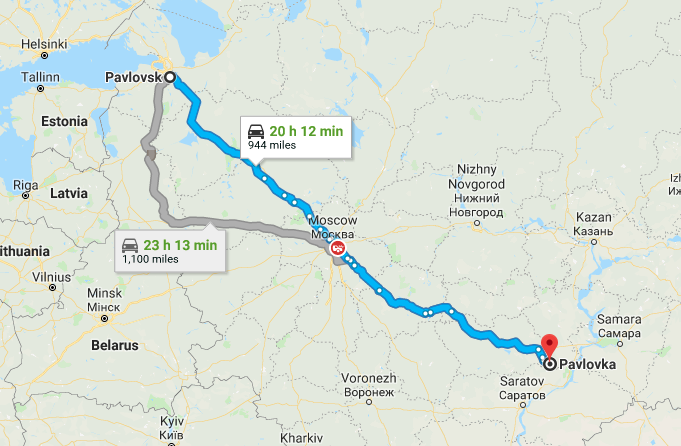
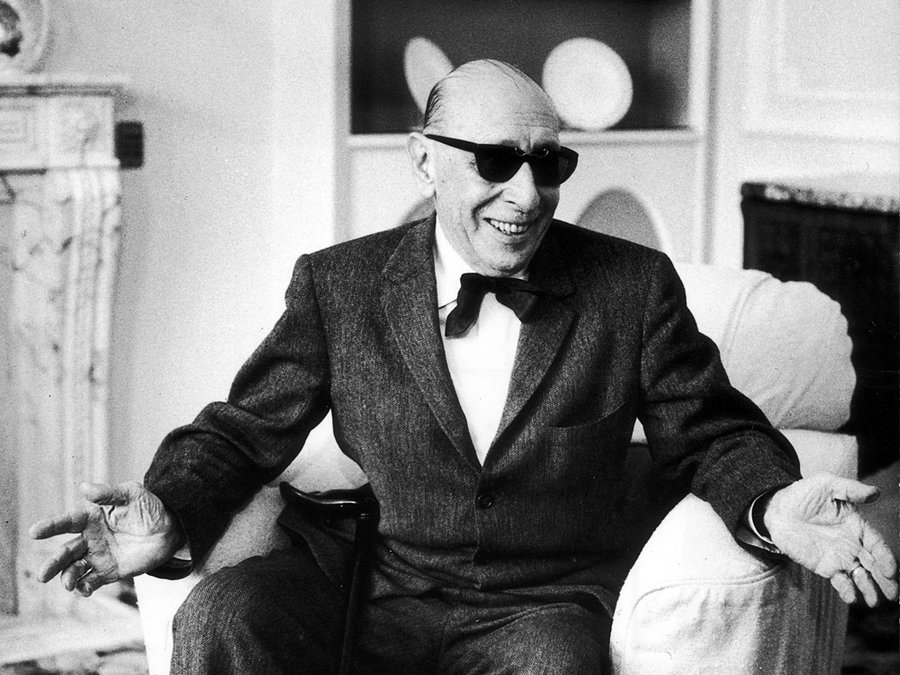
Igor Stravinsky was an inveterate liar. He lied about big things, like the fact that he used authentic folk tunes to craft The Rite of Spring (not only did he use folk songs, all the songs he used were located on the bottom of right hand pages in the collection he was studying); and he also lied about little things, like what year he first heard Debussy’s “Prélude à l’après-midi d’un faune” (it was premiered in Russia in 1904 in Pavlovsk, but Stravinsky himself was in Pavlovka, about 1,000 miles away.)

In preparing for talks at the Chicago Symphony this past weekend, I came across a real set of whoppers from old Igor, all to do with his opus 3, the Scherzo fantastique.

Bees

The Scherzo fantastique is music about bees. More specifically, it is a musical portrayal of bees in the hive, their communications, their mating rituals, and their general swarm of activity. This is Stravinsky’s prefatory note from the French edition of the score:

In the summer of 1907, I read many books on the life of bees and I was very much moved by many details in the life of this extraordinary world. The uninterrupted life of the swarm (hive) through the generations and the nuptial flight of the queen bee, the murder of the male, her lover, in the giddy heights, the vital energy and the ferocious lyricism served me as the so-called literary basis for this symphonic poem, which I have entitled Scherzo fantastique.

Most of that is true, except that Stravinsky definitely did not read “many books” about the life of bees that summer, he read one book: Maurice Maeterlinck’s La vie des abeilles (The life of bees).

It’s worth noting how weird it is that Stravinsky decided to compose a tone poem bases on a non-fiction treatise about insects. Maurice Maeterlinck wrote a few scientific essays, but he was mainly known as the leading poet-playwright in fin-de-siècle Europe, and most composers were setting Maeterlinck’s theatrical and lyrical masterpieces to music (Pelléas et Mélisdande, for example, was set by Fauré, Debussy, Schoenberg, and Sibelius.)

But Stravinsky was a weirdo so he wrote this bee piece. He was 26 years old and still in his infancy as a composer (unlike, say, Mozart or Mendelssohn, who were mature masters at that age.) In fact, he was still a student of Rimsky-Korsakov when he wrote the Scherzo and so he may have been inspired by his teacher’s most famous work.

While he was at his country estate working on the Scherzo, he kept Rimsky-Korsakov up to date on his progress, writing on June 18, 1907

When we see each other I’ll show you the spots in Maeterlinck I took for the program, since it won’t all go into a letter.

And indeed, if we compare La vie des abeilles to Stravinsky’s Scherzo, it’s pretty obvious how the whole thing lines up, starting with the very first notes, the “war-song of the queen bee”, which Maeterlinck describes as “resembling somewhat the note of a distant trumpet of silver,” and which Stravinsky gives to a muted trumpet playing forte.

From here the specific musical allusions continue apace. This sort of musical image-making is a perfectly fine thing for a composer to engage in, and it’s probably fine that Stravinsky hadn’t neither sought nor received permission from Maeterlinck to set his treatise to music – after all, it was a purely instrumental piece inspired by a scientific essay.

Lies

The big lies started about ten years later in 1917, when the Paris Opera’s ballet company planned a production of a new ballet called “Les abeilles” (the bees) set to the music of the Scherzo fantastique, and advertised the ballet and the music as being based on Maeterlinck’s treatise.

That’s when the lawyers got involved. Maeterlinck sued Stravinsky and the Paris Opera, but Stravinsky played dumb, claiming that, not only had he not based his piece on La vie des abeilles, but that he had been totally unaware of the Paris Opera’s intentions. He stopped barely short of claiming not to know what a bee was or that such insects even existed.

Stravinsky’s claim crumbles like the proverbial house of cards under the slightest scrutiny. In December 1916, he had written to Gabriel Pierné that he was looking forward to the ballet’s première, and we know for a fact that he had approved of the plans of the ballet with Jacques Rouché, the director of the Paris Opera, and that he had even been scheduled to conduct the opening night performance (and would have had he not been sick.)

It seems like he was able to deceive Maeterlinck well enough to evade any serious ramifications, and nothing really came of the lawsuit. This would of course embolden Stravinsky as he went on to rewrite his own personal history in essays and interviews in the coming years.

Coda

Maurice Maeterlinck, it turned out, was hardly a boy scout himself. In 1926, he wrote his long awaited follow up to The life of bees called The life of the termites, which he plagiarized nearly word-for-word from the Afrikaner poet-scientist Eugène Marais. (A linguistic note: Maeterlinck was Belgian, and though he wrote in French, he spoke Dutch well enough to read Marais’ Afrikaans treatise.)

Basically, nobody connected to the Scherzo fantastique had so much as a single moral fiber in their body.

Odds and ends

  • The style of the Scherzo, which Stravinsky claimed had been inspired by modern French music (i.e. the Debussy pieces that he had never heard), rigorously followed Rimsky-Korsakov’s principals of harmony. That is, until the central portion of the piece, in which Stravinsky stole unabashedly from Richard Wagner. Listen to the section beginning at 3:42 in the above video and compare it to Wagner’s Siegfried Idyll.
  • Stravinsky was quite pleased later in life with this early work, saying that it was “quite a good opus 3”.
  • The orchestration of the Scherzo is unique in the repertoire. It is scored for triple woodwinds, four horns, three trumpets (including alto in F), celesta, and three harps, but completely dispenses with low brass, and includes only a part for suspended cymbal in the percussion department.
  • In another letter to Rimsky-Korsakov, Stravinsky said that, “the harmony in The Bees will be fierce, like a toothache, but all at once it should turn pleasant, like cocaine.”

Process Addendum

One thing I may not have expressed well enough in the last post is just how much of a role random chance, accidents, and gut level queasiness play in composing a piece from scratch.

Sometimes you accidentally hit a bunch notes on the piano and they turn out to be a chord you never would have thought of but works.

Sometimes you type something into the computer wrong or copy it into the wrong measure, and it’s not at all what you had intended but is in fact WAY better.

Sometimes you think you’ve finished work on a passage but it nags at you for weeks and you finally go back and throw the whole thing out and redo it.

John McPhee has a nice passage in his Draft No. 4:

What counts is a finished piece, and how you get there is idiosyncratic. Alternating between handwriting and computer typing almost always moves me along, but that doesn’t mean it will work for you. It just might. I knew an editor who had a lot of contempt for nearly all writers and did his own writing with a quill pen.

Interestingly, I would say that 90% of people are disappointed when I tell them I compose symphonies and sonatas with a computer instead of a quill.