Posts Categorized: Posts

Desert Island Discs

Desert Island Discs

My friend Will got me hooked on the DIDA podcasts in a bad way last month, and since then I’ve listened to everyone from Artur Rubinstein to Joanna Lumley (’87 and ’07) to Kingsley Amis to Vivienne Westwood.  My favorites so far include: Gÿorgÿ Ligeti ’82, Sondheim ’80, and Imogen Holst ’72, but there is something in there for everyone.  I was surprised by how much I enjoyed Peter Maxwell Davies and Harrison Birtwistle, given what I think of their music.  Grace Bumbry‘s accent was Next Level crazy.

Because you can listen to archived episodes through the decades, you can track a (somewhat disappointing) cultural evolution.  Initially, the program was focused on classical musicians, stage actors, and poets.  Even the film stars chose all-classical selections (witness Lauren Bacall, who didn’t really seem to understand a word of what she was saying.)  Received Pronunciation was de rigeur, and Roy Plomley, the founding host, stressed the playful, imaginative side of the game.

Jimmy Stewart was one of the earliest guests I’ve found to take a mostly non-classical approach.  During Sue Lawley’s reign in the ’90s, the interviews took on a more confrontational tack, and the musical selections trended decidedly more towards pop, to the point where now, hardly anyone chooses a classical selection.  The proportion of film/TV stars and politicians invited to the show began to outweigh that of the classical artists.  People stopped disguising their regional accents.

The fun of listening to DID is, of course, concocting one’s own set of selections and responses.  Here are mine:

Questions

Could you take care of yourself on the island? Reasonably well.
Could you set up a shelter?  Yes.
Cultivate? Sure.  Fish? I caught an eel once.
Could you endure loneliness?  As long as I stayed busy.
Could you rig up a shift or a raft?  Perhaps
Would you try to escape?  No.

Discs

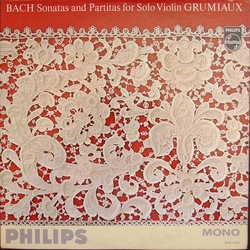
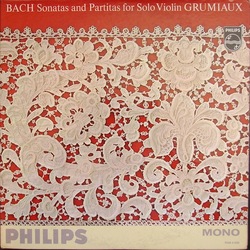
1. Bach, Complete Sonatas and Partitas for Violin, performed by Arthur Grumiaux
LPMH3092

The profoundest and most philosophical music I know.  The fact that it is written for a solo instrument would give it a particular resonance on the island.  There are many fine recordings, but Grumiaux’s is a sentimental favorite.

2. Lyle Lovett, Pontiac

Lyle_Lovett-Pontiac

Reminds me of my childhood (my parents were both big fans) and would give me something to sing along to.

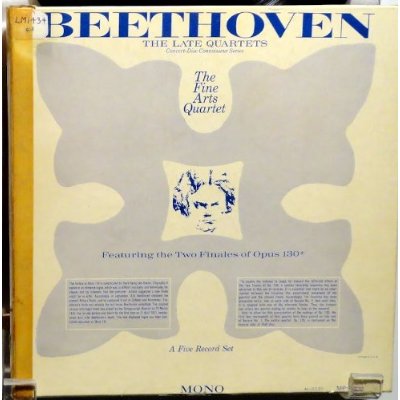
3. Beethoven, Late Quartets, performed by the Fine Arts Quartet
51B4a7cEclL._SS400_

There’s plenty to console, perplex and mesmerize in this music.  I would prefer the recording by the Fine Arts Quartet, but it’s not on Spotify, so the link above is for the Budapest’s recording.

4. Kurt Weill, The Seven Deadly Sins, performed by Marianne Faithfull

This is another recording that’s not on Spotify (or YouTube), but none other will do.  MF’s rendition of “The Pirate Jenny” is on the same disc, so I included it above.  More singalong fodder, beautiful orchestration and great nostalgia value.

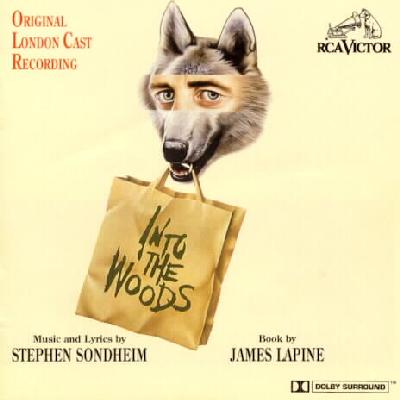
5. Sondheim, Into the Woods, Original London Cast
Into_the_Woods_cast_recording_(London,_1990)

Life would be hard without this.  I linked to the Original Broadway Cast under duress, since the OLC isn’t on Spotify.

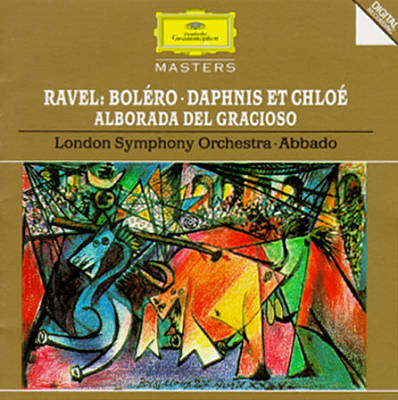
6. Ravel, Daphnis et Chloé, London Symphony/Abbado
MI0000978809

Obvs.

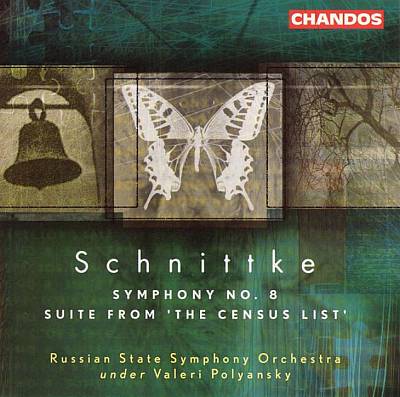
7. Schnittke, Symphony No. 8, Russian State Symphony/Polyansky
MI0001043034

This transcendental masterpiece is paired with Schnittke’s totally irreverent score to “The Census List”.  The two compliment each other incredibly well.

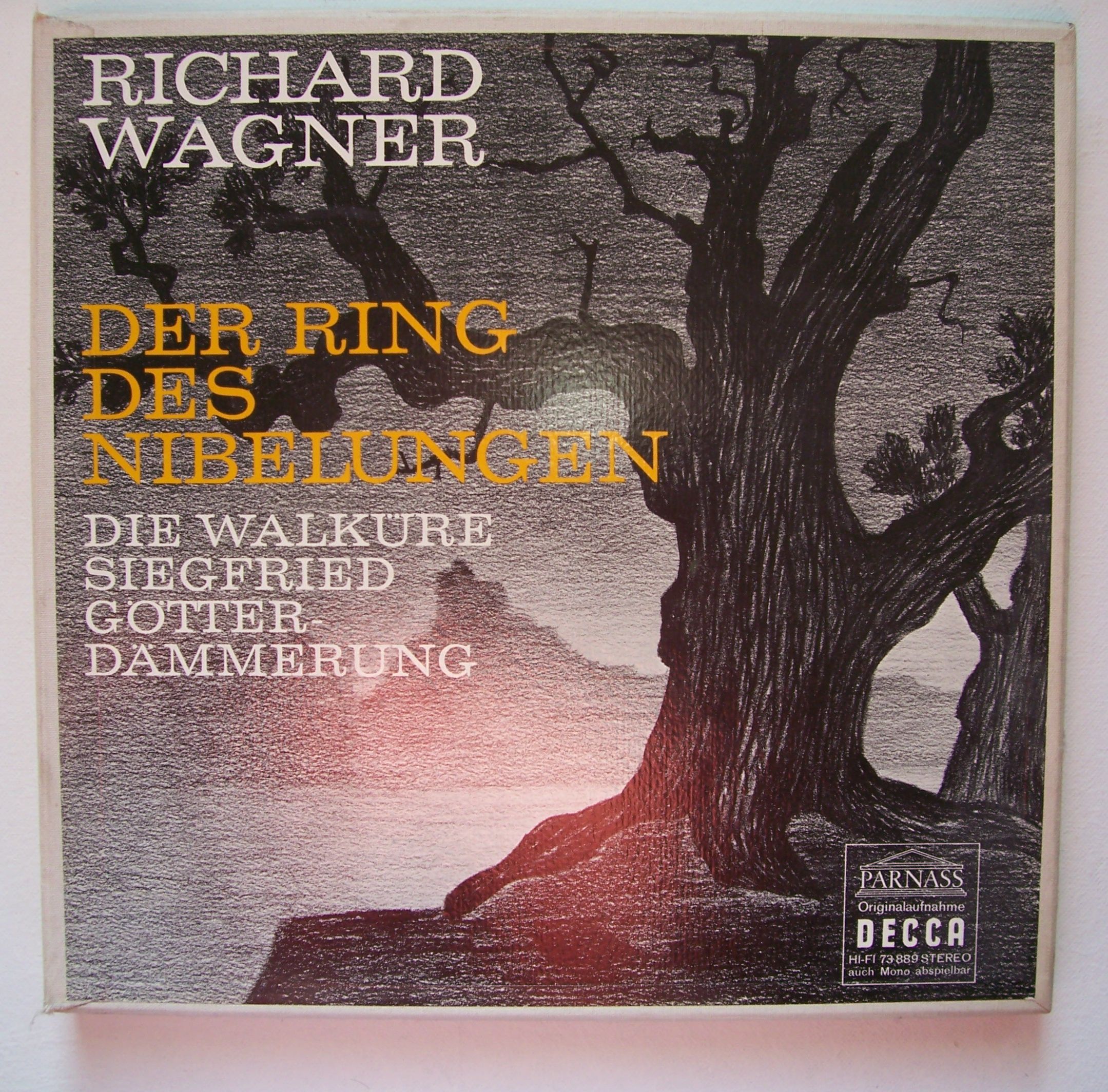
8. Wagner, Der Ring des Nibelungen, Wiener Philharmoniker/Solti
wagner10

I’m not as familiar with the entirety of the Ring Cycle as I’d like to be, though my adoration of Wagner’s music increases with each passing year.  Gaining familiarity would give me plenty to do on the island.

Book (in addition to the Bible and the complete works of Shakespeare)

If it were allowed, I’d take the Oxford Companion to Shakespeare; if not, I’d take  the entirety of A Song of Ice and Fire, as long as the 6th and 7th novels were airdropped to me when they’ve been finished.

Luxury: Piano
An American Symphony

Mr. Hollands Opus

Kyle Gann (not pictured) recently proposed an interesting course on the American symphony, the idea being to focus on a different symphony each week, and thus examine the development of the American symphonic language.

His list was intriguing in all sorts of ways, but of course, I’ve got my own ideas on the subject.  I put my two cents in his comments section (and he wrote a very thoughtful response), but I thought it would be fun to do my own version.

KG included 19 works (which, methinks goes beyond the boundaries of a single semester at his rate.)  I designed my course as a 10-week UChicago style quarter with two works per week, and I’m also cheating in a different way by occasionally including a non-symphonic orchestral work.

Week 1: Chadwick, Symphony No. 2 (1885); Beach, “Gaelic Symphony” (1897)

Week 2: Ives, Symphony No. 1 (1901); Ives, Symphony No. 4 (1918/26)

Week 3: Hanson, Symphony No. 2 “Romantic” (1930); Griffes, “The White Peacock” (1919)

Week 4: Still, “Afro-American Symphony” (1930); Antheil, “A Jazz Symphony” (1925)

Week 5: Barber, Symphony No. 1 (1936); Harris, Symphony No. 3 (1937)

Week 6: Copland, Symphony No. 3 (1946); Bernstein, Symphony No. 1 “Jeremiah” (1942)

Week 7: Persichetti, Symphony for Wind Band (1956); Blackwood, Symphony No. 1 (1955)

Week 8: Del Tredici, “An Alice Symphony” (1969/76); Stephen Albert, Symphony No. 1 “Riverrun” (1985)

Week 9: Corigliano, Symphony No. 1 (1988); Ran, Symphony (1990)

Week 10: Philip Glass, Symphony No. 8 (2005); Rouse, Symphony No. 4 (2014)

And if I could find time for it in Week 8 or 9, I would try to add Jennifer Higdon’s Blue Cathedral.

Opera

silent

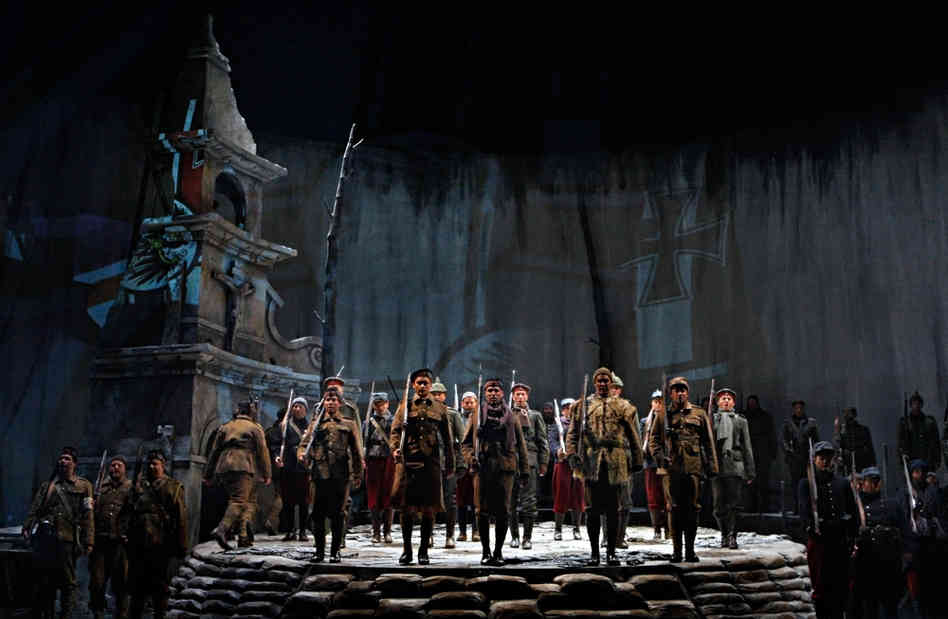
Kevin Puts’ Silent Night (which has its own trailerrific web site) just played at the Cincinnati Opera. In 2012, this piece won its composer the Pulitzer Prize for music.  If anything, it should have won for drama; the score was a bunt.

There are a few beautiful moments, but no big tunes, no searing arias, no wondrous dramatic set pieces for the orchestra.  My main complaint with contemporary composers of classical music is that they so rarely seek to compete with the immortals.  Why compose an opera if you’re not setting out to beat Puccini at his own game?  I’d rather see another Tosca or Wozzeck.  Those may be masterpieces, but they can be outdone, and that’s exactly what we composers should always be trying to do.

During the intermission, I heard one old lady say to another old lady, “it’s a nice story, with music.”  That about sums it up.  In fact, I’d say it’s much more like a movie with an OK soundtrack in which the dialogue happens to be sung in vaguely melodic-ariosi.

I can see why people would like this show, or say that they like it, (the libretto uses multiple languages, the set and costumes are excellent, the true story is intriguing) but I’d be willing to bet that true opera lovers will feel disappointed, even if they can’t articulate why.

But it’s most often non-musical people who get to decide what music we get to hear at our big institutions, so this piece is sure to get many more performances and productions.  That’s a shame if it keeps opera companies from commissioning really good new operas that sing in your heart for a lifetime.


A Happy Composer

Ladies and Gentlemen, today, I am a happy composer.  What makes a composer happy?  Well, basically nothing – we’re all tortured, existentially-fraught philosophers in sound who see this world for the vale of tears it really is.

But occasionally one receives a very decent recording of one’s own work, and one can’t help but feel a moment of pride.  Therefore, I present to you now two of my newest musical children:

Symphonic Essay (2014)

I composed this piece mainly this past January for the Cincinnati Symphony Youth Orchestra; we premiered it at the end of March and recorded it at the beginning of May.  Here’s an earlier essay/manifesto I wrote about it.

The Dwarf Planets (2012)

A suite in five movements for brass quintet, timpani and organ, composed for the Gargoyle Brass Quintet.  Each movement depicts the god or goddess assigned to one of the outermost celestial bodies in our solar system (click the title above for more info thereabout.)

Haumea

Pluto

Ceres

Eris

Makemake

I love this quote

from Bryan Magee’s Confessions of a Philosopher, p. 269:

What to my mind sets Wagner and Shakespeare apart from other artists is the fact that they deal with everything.  Their works confront the totality of human experience, and present our emotional life as it is, in its wholeness.  So much of even the greatest art is aspirational, concerned with, and aiming at, ideals.  Bach said he was composing his music to the greater glory of God; Beethoven said he was trying to express the highest of human aspirations; and one could multiply these sentiments many times over by quoting from the mouths of some of the greatest of artists.  Art that springs from such motives can be wonderful, but cannot articulate the realities of human feeling across more than part of its range.  Wagner’s work, by contrast, is not aspirational but cognitive, truth-telling; and he tells it like it is, down to emotions we disown.  Shakespeare does the same, across an even bigger canvas.  If Wagner is enabled to go deeper it is only because his chief expressive medium is music rather than words.

Now me: I think Mahler was aspiring to do what Wagner did naturally (if not heedlessly,) but it comes off as self-conscious and pretentious in his music instead of id-driven and inexorable as in Wagner’s.

In other news, if you ever get a chance to hear Tchaikovsky’s conservatory dissertation setting of “Ode to Joy”, run for the hills.  Aside from a precious few lovely moments, it’s just one primitive melody after another, set in a wandering morass of the blandest counterpoint.  However, I find it deeply gratifying to know that the composer of Pique Dame and the “Pathétique” Symphony did not spring fully formed from the head of Zeus.  Not every great composer had to start off that way, and that gives hope for the rest of us.

I mention this piece because we’re performing it on a concert with Beethoven’s 9th.  Beethoven’s music, of course, completely overwhelms the text, tossing it around like a raft upon a stormy sea.

Luckily for Schiller, one musician set “An die Freude” perfectly, lending just the right wind to its sails: Franz Schubert.

List of pieces I deeply wish to conduct

that I haven’t conducted already, in no particular order, obviously not exhaustive:

Rachmaninoff: Symphonic Dances, Symphony No. 3, All-Night Vigil
Schnittke: Symphony No. 8, Choir Concerto, Viola Concerto, Suites from The Census List, Agony, Story of an Unknown Actor
Wagner: Die Walküre, Act III, Das Rheingold, Siegfrieds Tod & Trauermarsch
Berg: Violin Concerto
Sondheim: Sweeney Todd, Into the Woods, A Little Night Music
Herrmann: “Scène d’Amour” from Vertigo, “Conversation Piece” from North by Northwest
Weill: “The Seven Deadly Sins”
Poulenc: Gloria
Mozart: The Marriage of Figaro
Sibelius: Symphony No. 3
Ravel: Daphnis & Chloe, Piano Concerto in G, Left Hand Concerto
Bernstein: Mass, Trouble in Tahiti

Just throwing it out there.


Ramuntcho, Desplat

The Basque-Spanish conductor Juanjo Mena brought a delightfully obscure program to Cincinnati last week: Gabriel Pierné’s “Ramuntcho” Overture and Alberto Ginastera’s “Panambi” (complete).  The Ginastera is a wonderful piece and an especially impressive Op. 1 (composed at the tender age of 20) but I think enough ink has been spilled about Ginastera’s youthful stint as the Argentine Stravinsky.  There’s a great LSO recording which I’d recommend to one and all.

The piece I really fell in love with and feel compelled to discuss here is Gabriel Pierné’s overture to “Ramuntcho”, which I am quite confident in saying you, dear reader, have never heard before.

ramuntcho

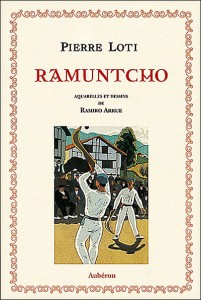
“Ramuntcho” started out as a novel by the French colonial diplomat/naval officer/oriental fetishist Pierre Loti.  It takes place in the Basque country, which was enough to make me want to know everything about it, cause I loves me some Basques.  You can you can download the novel for free and read it in a few days; I’d recommend it.

The book was adapted into a play for which Pierné composed the incidental score, hence the overture.  Before I continue, let’s just get two things out of the way: 1) Juanjo’s recording is the definitive version of this overture and way better than Pierné’s own scrappy account from the 1930’s (sorry Gabriel!)

And 2) let’s discuss what this overture is and what it isn’t.  It is very definitely not a symphonic movement with thematic development and the other trappings of that form.  It IS a charming medley of songs and dances culled, to the best of Pierné’s abilities from the folk tradition of the Basque country.  It is well orchestrated and delightful.

Here’s a couple examples of the loveliness that Pierné has wrought.  He took this unruly Basque folk dance, the “Aurresku”:

and rendered those tuneless txistus into a sprightly woodwind section:

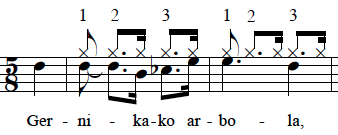
He also looked to the national rhythm of the Basques*, the zortziko, a 5/8 meter than has a feel of three with one short beat and two longer ones.  It’s excellently demonstrated by the lovely “unofficial national anthem” of the Basques, “Gernikako Arbola


Pierné does gives us a chirpy little tune with the zortziko lilt at the top of his overture:

and then lushes it up like a badass with the strings:

And assorted other loveliness.  Pierné’s output is a little hit or miss, which you can hear on Juanjo’s disc.  His music is grounded in Saint-Saëns with sprinklings of Roussel and Ravel.  So let’s all do our little part for Pierné and the Basque people and listen to and read “Ramuntcho”!

*So then what’s the U.S. “national rhythm”?  The back-beat?  Discuss.


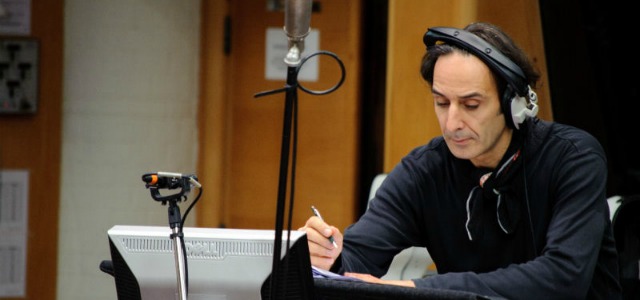
I’m officially on board with Alexandre Desplat.  I know, it’s like, welcome to the 21st century, but his totally anachronistic score to “The King’s Speech” just rubbed me too much the wrong way.  After seeing The Grand Budapest Hotel – a movie I thought better than most of Wes Anderson’s recent efforts but still not quite my cup of tea – I see how vivid M. Desplat’s musical imagination is and what a compelling partnership these two artists make, verging on Ozon-Rombi/Almodóvar-Iglesias/Burton-Elfman territory.

[Side note: who is the gayer filmmaker: the openly homosexual François Ozon or the openly dandified Wes Anderson?  Is it possible, given our current cultural understanding of the ‘gay’ to consider the pink-frosted confections of a straight man more aligned with this categorically than, say, “In the House”?  Discuss.]

My thing with Bruckner

It’s not that I don’t like Bruckner.  But it’s not that I do, exactly, either.

If I can get good and steeped in Bruckner’s musical world, for like, even longer than the length of one of his symphonies, I can get into it.  But I rarely find that prospect very tempting, because there’s just not enough surface variety or prettiness to coax me down the path to all that depth and beauty.

Which is tantamount to admitting that I’m shallow, and, OK, guilty as charged.  But I like to think that I’m maybe a little shallow and a little deep all at once, and there are a number of composers who know just how to calibrate that the spoonful of sugar with the medicine going down.

Johannes Brahms is, of course, the paramount example.  On the other side of the spectrum from Bruckner would be, say, Tchaikovsky, whose music definitely errs on the side of aural ravishment rather than emotional honesty.

That doesn’t quite get the dichotomy though, because Bruckner’s music can, in a way, be aurally ravishming as well.  It’s more so that Tchaikovsky’s music (and Brahms’, Beethoven’s, et al.’s to various extents) is performative music, whereas Bruckner’s just is.  That is to say, when Tchaikovsky gives you grief or joy, it’s often not the genuine article as much as it is the performance of those things.

Another way of saying it might be that Tchaikovsky’s music is, in a sense, the actor upon the stage.  Whereas Bruckner’s music just is.

Which is surely a great and noble and virtuous achievement, and why Bruckner’s devotees are quite so ardent.  But is it a crime for me to wish for a little wit with my joy?  A little melodrama with my sadness?  For a little fun every now and again?

I don’t mean to take anything away from Bruckner (not that I could if I tried.)  His melodies and textures are often gorgeous (even if his handling of said material is just as often perplexing and aimless.  Exhibit A: this 12-iteration https://www.willcwhite.com/audio/bruckner%20sequence.%20Adagio_%20sehr%20feierlich%201.mp3

I’m sure I’ve earned the scorn of the Brucknerian Horde.  So please, do your worst.

[Also worth noting for people who are as shallow as I: the google image search of “Bruckner” brought up images of a certain Aaron Brückner, for which you may thank me later.]

Symphonic Essay

logo-composer-transparent

Writing a symphony in 2014 is like saying to yourself, “I know, why don’t I pursue a project that guarantees the least possible public reward and requires the greatest amount of time, ambition, and concentration.”  And yet, that’s what I’m doing.

I’ve got one movement finished (which I’ll premiere with my YO at the end of March) and, admittedly, writing it has been a thrill, though it’s kept me up many a night.  The movement I’ve got now is the genuine article, as Sonata-Allegro as they come, complete with Introduction, Exposition, Development, Recap, and Coda to boot.

It’s a shame that our prestige composers no longer deign to flatter a common form as they once did, especially one as rich as the symphony.  Perhaps I’m just simple, or reactionary, or lacking in invention, but for me, working within this framework has posed an infinity of choices, enough to suggest that there’s enough variety in the form to engage better composers.

But who cares?  Therein lies the rub.  I’m starting to figure out that one of my life’s big projects is to create a new audience for intelligent orchestral music.  By intelligent, I mean music that weaves together strands of traditional, academic, and vernacular styles into a unified language that appeals to the large body of educated music listeners who seek out new indie rock and hip-hop for get their major musical statements.

And by orchestral, I actually mean orchestral – not just New Music Ensemble music expanded to the size of the symphony orchestra.  Music that shows the unique properties of the modern orchestra (and the musicians therein) to their best advantage.

goldfinch

The Goldfinch” (which, do yourself a favor and just read it already if you haven’t yet) is a hell of a novel, brimming with memorable characters, set pieces, and philosophy.  If Donna Tartt can succeed in writing a novel that manages to be thoroughly contemporary and to respect the form’s heritage at the same time (and she very much has), then I might as well take a stab at doing something similar with a symphony.

So please, somebody, just keep orchestras alive another fifty years and I promise you I’ll create a listening public eager to hear new symphonies in the concert hall.  K?

Peau d’Ane

Here’s a little Christmas gift for everybody: Peau d’Âne, the strangest film of Jacques Demy’s career, and, by coincidence, probably the strangest film ever made.

For those among my readers who are unfamiliar with the work of the French auteur, allow me to catch you up: Jacques Demy made four or five films in the late 50’s/early 60’s, but his cult following really began in 1964 when he teamed up with the legendary French jazz pianist/composer Michel Legrand on a little collaboration known as Les Parapluies de Cherbourg.

“The Umbrellas of Cherbourg” might be considered a musical, but if we’re being fussy about our nomenclature, it’s really an opera – the dialogue is entirely sung.  It’s become a cult hit, and it’s absolutely worth your while to see/listen to.  If you ask me nicely, I’ll come over to your house and sing the entire thing from start to finish (I will also do this if you mention it in passing.)

[A side note: my mother was 15 when “The Umbrellas” made its way over to the states, and promptly fell in love with it.  She broke up with her high school boyfriend when he didn’t share her ardor for the movie.  In retrospect, it probably would have been a much worse sign if her teenage boyfriend had fallen in love with a campy French musical.]

[Another side note: Stephen Sondheim’s one flaw as a human being is that he doesn’t like Les Parapluies de Cherbourg.  In a sense, he’s right: it’s a ridiculous conceit with a clunky execution (the text setting is particularly disastrous.)  But it’s just like, Steve, you’ve got to get past all of that.  It’s ok though, I still wouldn’t break up with him.]

After “Les Parapluies”, Jacque Demy and Michel Legrand teamed up once again for “Les Demoiselles de Rochefort”, which really is a musical.  Like its predecessor, it stars the incomparably ravishing Catherine Deneuve but it also features a cameos by Gene Kelly (who trots out a few mots de français) and George Chakiris.

This brings us to our special subject for today, the third and final Demy-Legrand collaboration, the incomparably strange Peau d’Âne – “Donkeyskin” – based on Charles Perrault’s incestuous fever-dream of a fairy-tale from 1695.

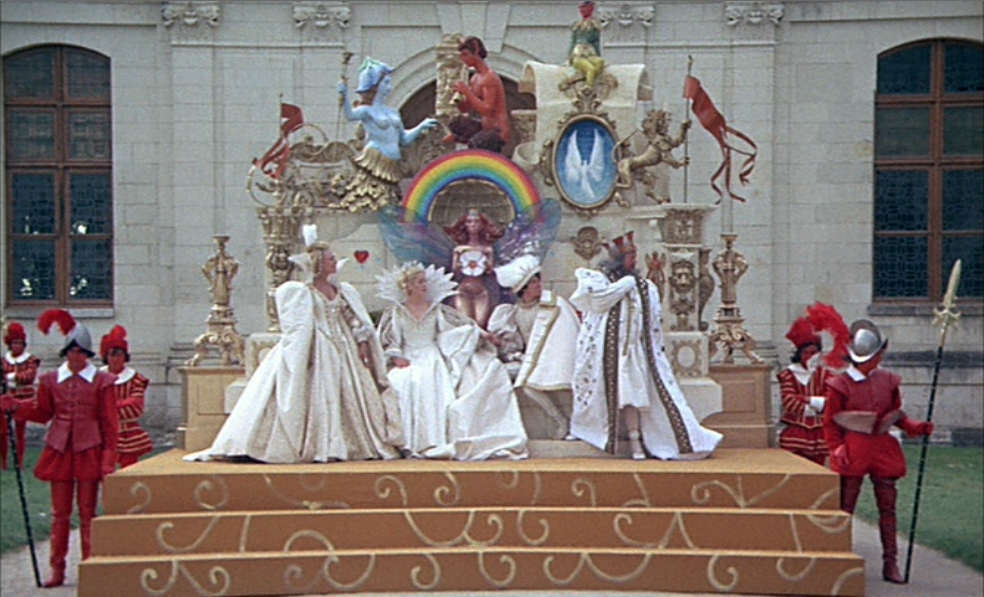
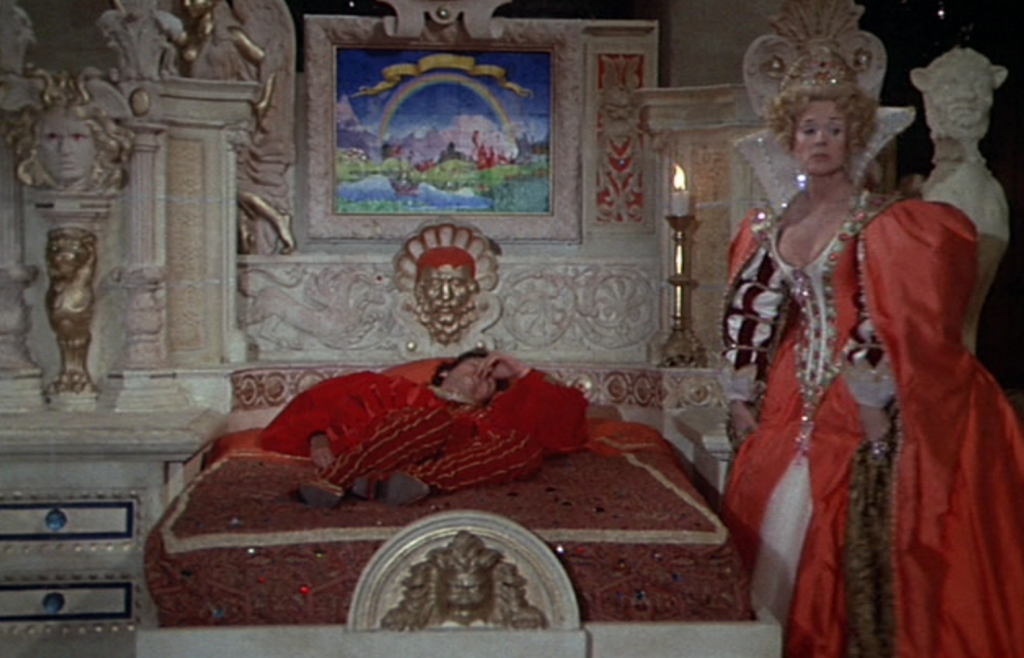
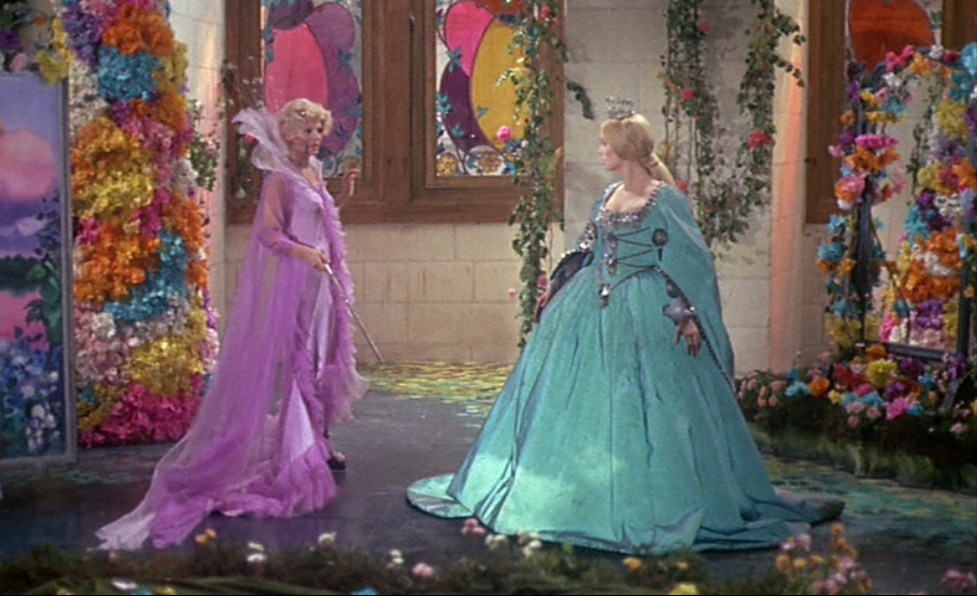
Where to begin?  Let’s start by saying that this has got to be the single campiest film of all time.  View, for example, the chintzy costumes and sets, complete with rainbow headboard:

Screen Shot 2013-11-15 at 9.09.51 PM

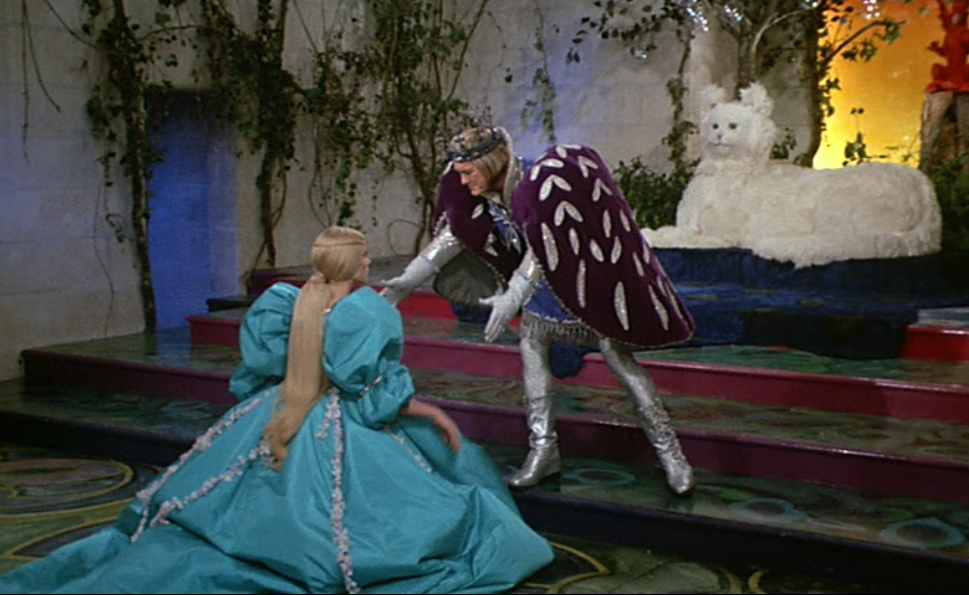
Or this cat bench:

Screen Shot 2013-12-23 at 12.20.16 PM

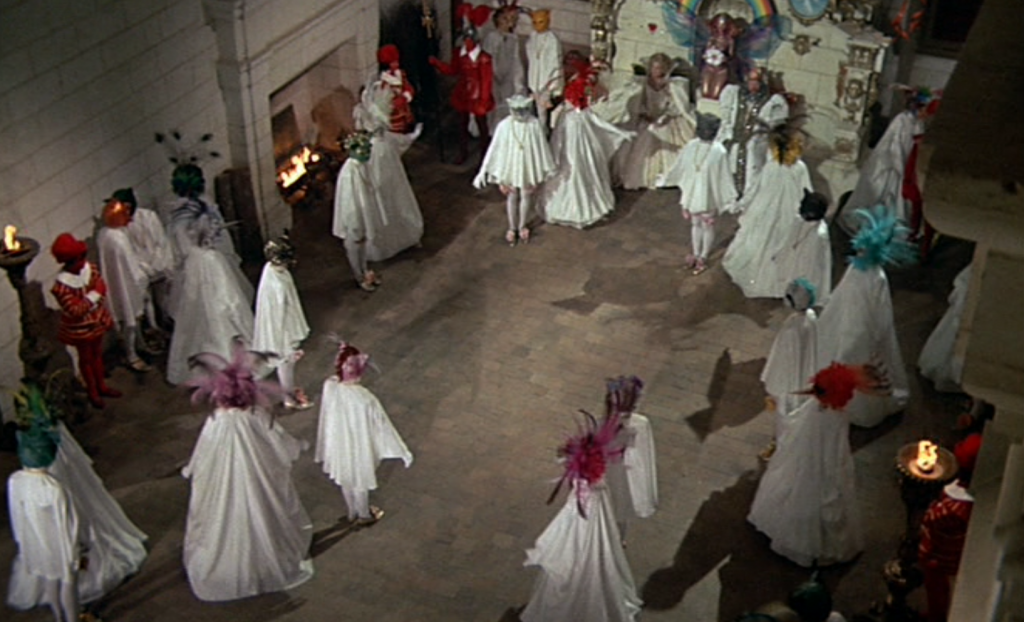
  Also, it’s basically Eyes Wide Shut

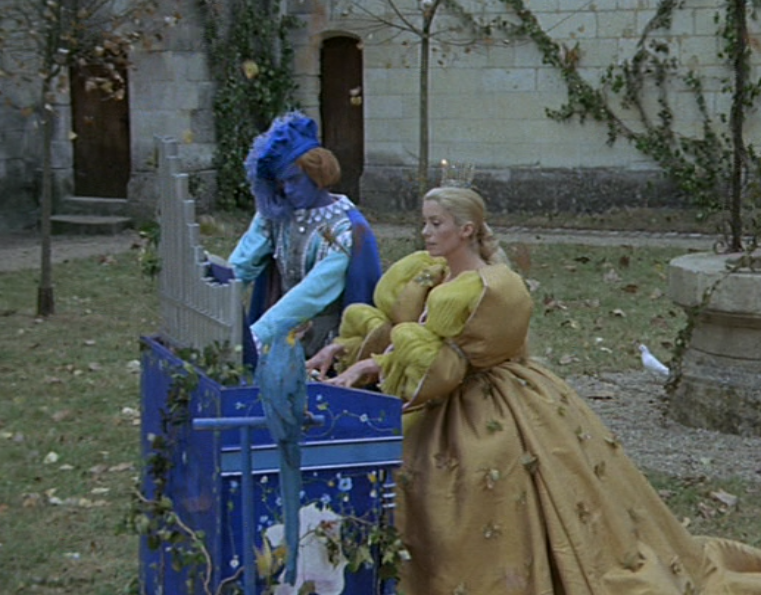
meets The Smurfs

done on the budget of an average episode of Mr. Rodgers  

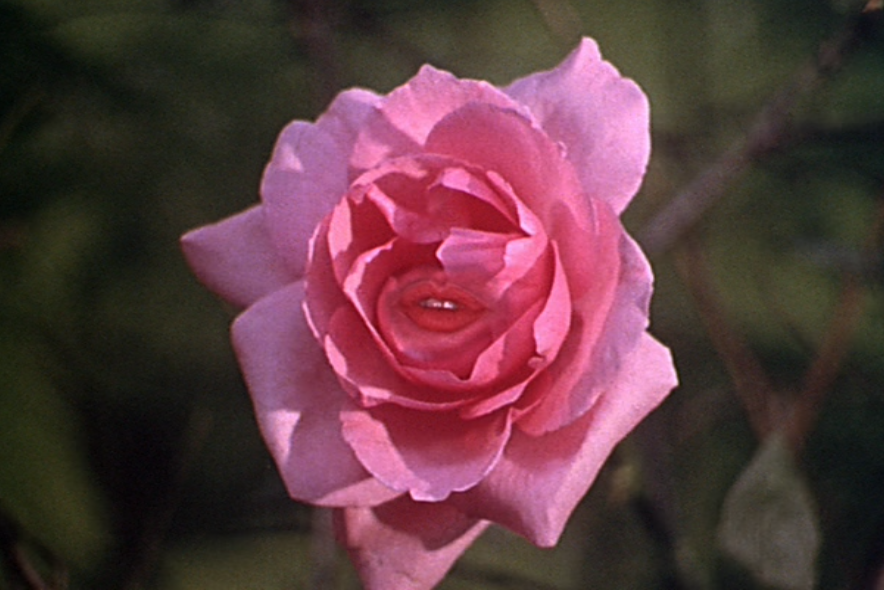
And a mouth inside an eye inside a rose, because acid flashbacks are so much fun:

I can only imagine that François Ozon came home from school every day and watched this movie from the ages of about 5-12.  Which brings me to the music, because I think Ozon must have forced Phillipe Rombi to listen to the “recipe song” from Peau d’Âne like 20 times before writing the score for Potiche:

I’ve often criticized Michel Legrand for his rather crude job inserting the text of “Les Parapluies” into his pre-existing tunes, but there’s a moment in Peau d’Âne that might just prove me wrong.  Listen to his setting of the word “la situation” in both scores:

I’m still right, but they’re very similar, so maybe he had a particular affinity for that word’s melodic qualities.

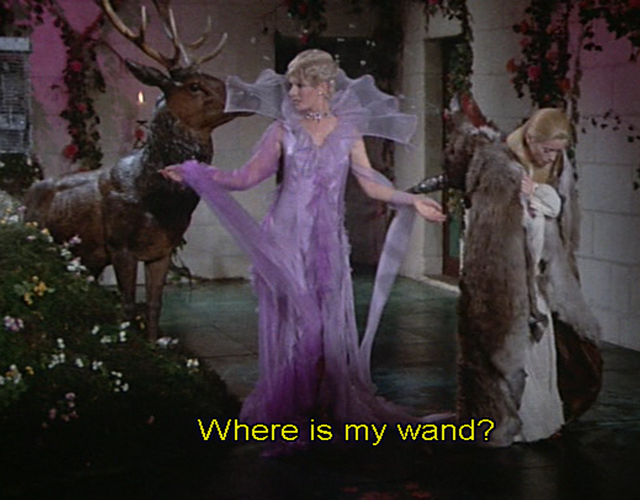
Finally, this is basically me as I leave the house before every rehearsal: