It’s time for my annual bout with post-Monteux depression, and for some reason it seems even more acute this year than normal. It’s probably because I have no rebound project to dive into immediately. In showbiz (or at least in late ’90’s East Coast high school theater parlance) we call this PPD: Post-Production Depression. It occurs when you’ve just dedicated tremendous time and energy into a big collaborative project; when the project comes to an end, the balloon deflates, and you’re left struggling to hold on to the feeling.
There’s something comforting in PPD though, because it means that what you were doing was worthwhile, and that you were working with great people – certainly the case for me this summer. I think a lot about the kids doing WST this summer, a troupe I was involved with from ’99 – ’02, and which gave me my first major experiences of PPD. These kids are about to wrap up a production of “Forum”, and even though that chapter of my life is ten years behind me (cue the next depressive episode), I know exactly how they’re going to feel this weekend after the run is over. It’s a strange mixture of relaxation and malaise, of needing to rest and needing to move at the same time; it’s amplified by like a thousand if you had a crush on someone during the production, which you might as well do.
The geography always kicks me in the butt after these summers too. Up in Maine, the bright Northern sun comes streaming into your window at around 5:30 in the morning and you wake up feeling like you’ve already started the day. Add to that a few breaths of the freshest air known to man, and your batteries are pretty well charged. Which is good for someone who’s about to go play viola for seven hours, bash around a tennis ball for two, and eat and drink too much in the remaining time. Ah, Maine.
My Summer Listening List has consisted of the following, listed in no particular order:
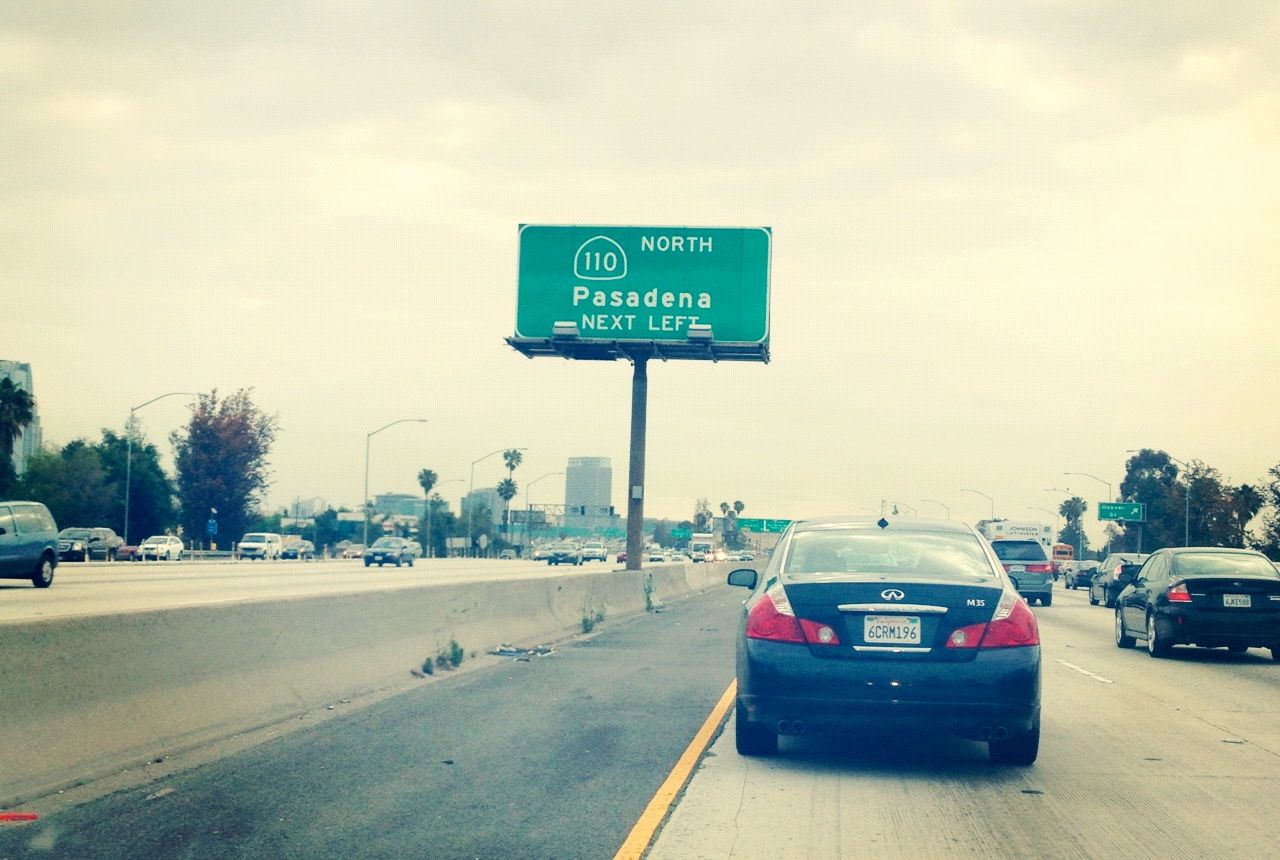
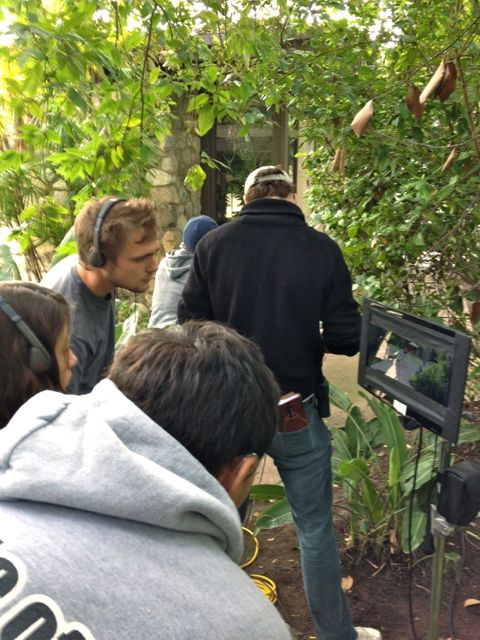
I’ve snuck away to Los Angeles for something like 56 hours in order to hang out on the set of my friend Will Slocombe‘s new movie, Pasadena. Will is one of the most talented and hard-working artists that I know; there’s a lot of so-called “filmmakers” out here in L.A., but Will keeps plugging away, pounding the pavement, and getting movies made. I would recommend that everyone watch the entirety of his web series RECEPTION if you want to get some insight into his brilliance in combining funny + sad (or if you just want an entertaining way to spend 20 minutes).
Will at work
Pasadena stars no less a titan than Peter Bogdanavich, and let me tell you, this is a command performance. This will be the second of Will’s pictures that I’ve scored, and I already know it’s going to be much harder, because it walks a very fine dramedic tightrope. The emotional content of each and every scene has to be perfectly calibrated. I’m thinking flutes.
While we’re on the subject of me being in L.A., we also need to talk about my friend Caitlin, not just because she’s another fascinating, successful person, but because her apartment, in which she has so generously allowed me to stay while she’s gone, is one of the most fastidiously curated living spaces I’ve ever encountered.
Caitlin’s life is centered around Death. She works as a funeral director, but in her free time she’s an internet celebrity and bloggeuse. I think the overarching thesis of Caitlin’s life and work is that since we’re all going to die, it’s probably better that we understand death and develop a healthy attitude towards it rather than relying on the collection of irrational fears our society has foisted upon us. People spend a lot of money to keep the very idea of death at bay, and the funeral industry reaps the benefits from our psychoses.
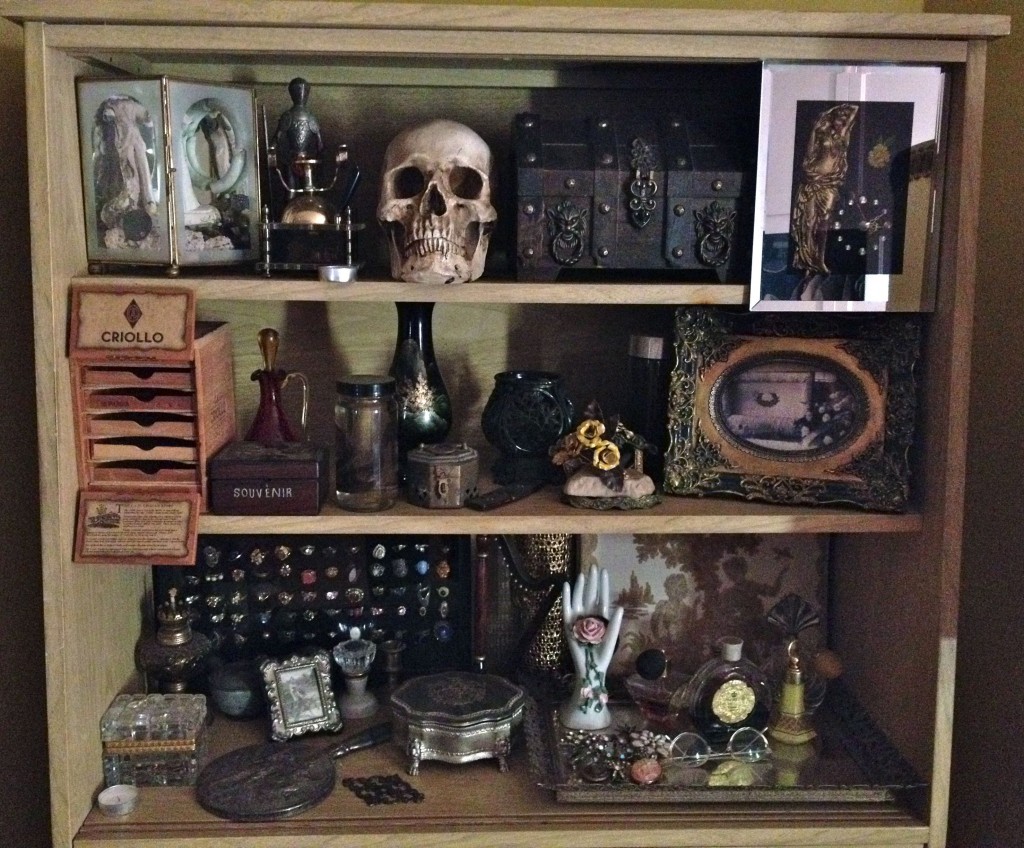
But anyway, back to Caitlin’s apartment, it’s pretty incredible what she’s done with the place. Every available inch is filled with the photos, mementos, or very remains of someone who is no longer with us (there are at least two human skulls, one alligator skull and a large trophy bust of a deer scattered throughout her apartment.)
Some of Caitlin's actual stuff
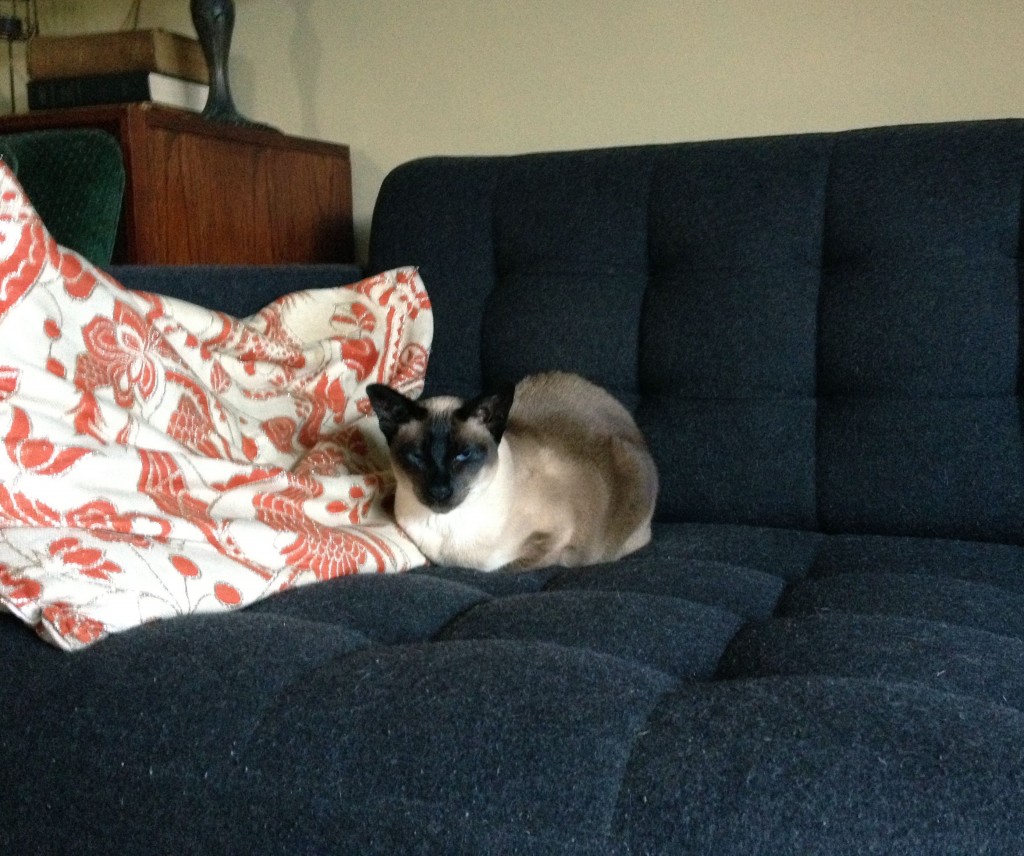
There are also several things that seem like they could kill me, including a variety of talismans and religious icons, a snake, and this cat, who I think is a cross between a Siamese and a vampire bat (and who, let the record show, just farted and promptly left the room.)
It should come as no surprise that last night I had a riveting, all-night long dream about the zombie apocalypse.
Tonight I’ll get to catch an echt-Rattelian program at the LA Phil consisting of Ligeti’s Atmosphères, the Act I prelude from Lohengrin, Mahler’s Rückert-Lieder and Bruckner 9. Then back to Cincinnati first thing tomorrow where it will all of a sudden be crazytown due to this wild extravaganza called the May Festival, after which I may be embracing death more than ever!
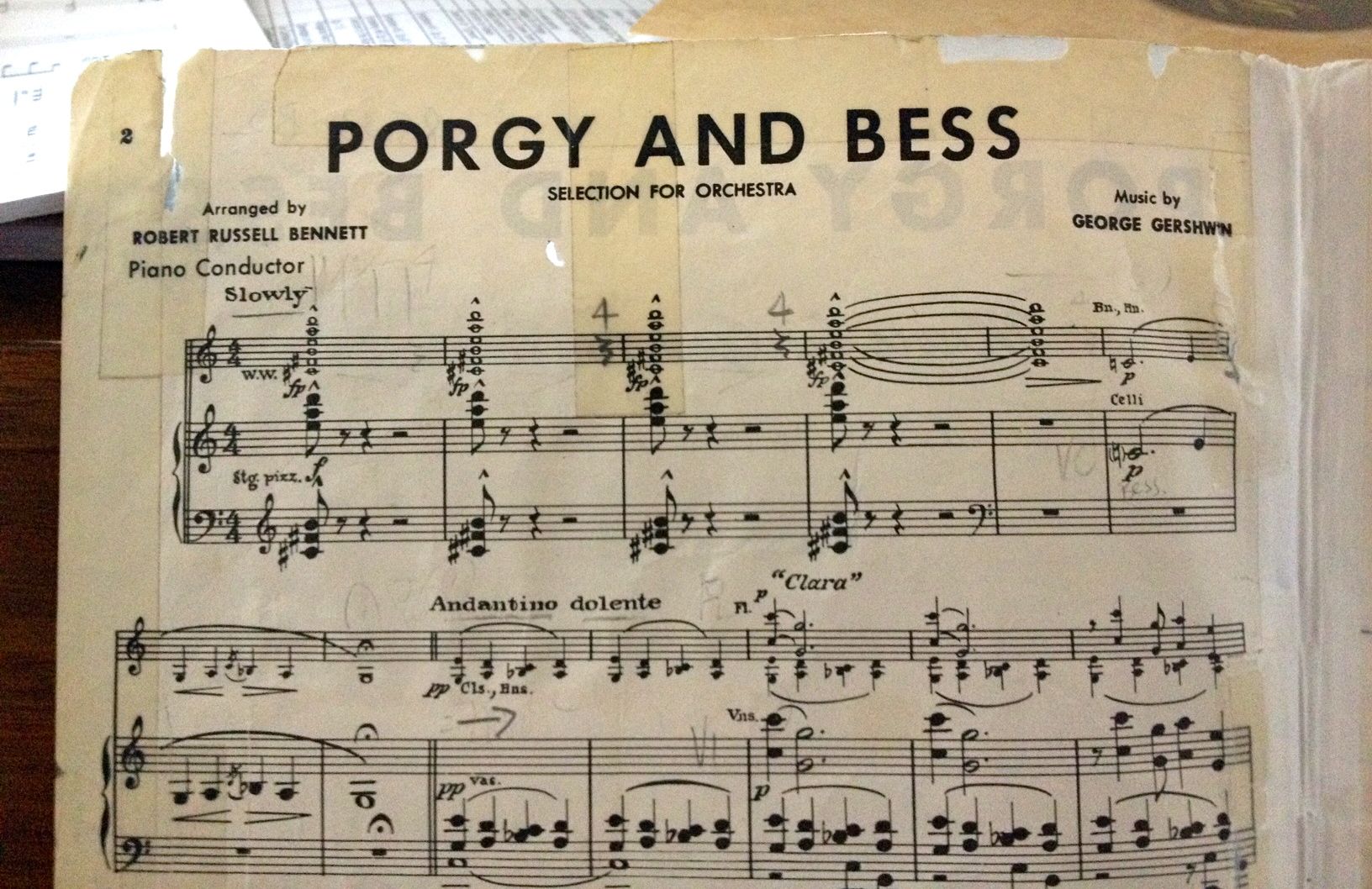
The publisher asks $500.00 as the replacement fee for the above score. Because it’s Out of Print. And I’m just like, bitch, I can xerox you that shit for seventy-five cent! Unless that scotch tape was affixed by George Gershwin himself, five hundred dollars seems a rather high asking price.
Out of Print makes precisely zero sense to me. I just don’t understand it. Is someone at your organization not capable of typing those notes into a computer? For $500, I’ll do it in less than a day and replicate every single aspect of your score (minus the Gershwin tape).
In these days of copy machines, pdfs, and Finale, I can’t see any way that the publishing industry will continue on the same model much longer. Change comes stultifyingly slow in the classical music world, but sooner or later someone’s going to get wise and streamline a TON, and this whole rental business is going to look very different.
Or am I wrong? Are perpetual copyright laws and publishing monopolies bound to keep things in the same state of disrepair?
I’m sensing the opportunity for a plug. People, just buy my music. It’s really good, I promise, and not expensive. We can make the transaction super clean and scotch tape-free. Unless you’re looking to increase the resale value, in which case I will gladly affix tape, scotch or otherwise, thereupon.
It’s not so often that Cincinnati, OH feels like the center of the musical world, and it’s even rarer that I get to work with several of my musical idols on a single project. But every once in a while, the stars align, and this past week was one of those rare occasions.
March 30 & 31 saw the world premiere of Philip Glass’s new cello concerto (no. 2) by our CSO. I’ve never thought of myself as a big Philip Glass fan, but in preparing for the concert this past week I had occasion to go back through my CD collection, and there’s no denying that I’ve had my Glassy phases. When I was a freshman in college, I used to listen to the last movement of his second symphony over and over again on repeat (and yes, I realize that many of my readers will find that concept delightfully ironic.) The coda is SO MUCH FUN and it features my favorite repeat in all of Glass’s work, because just when you think the movement is about to finish, he goes back in for another round (1:03):
I’ve also harbored attachments to the first violin concerto and “Glassworks” among others, which, when I added it all up, made me realize that I really am a Philip Glass fan. Which I think is one of those things that serious musicians aren’t supposed to say, but all the more reason for saying it.
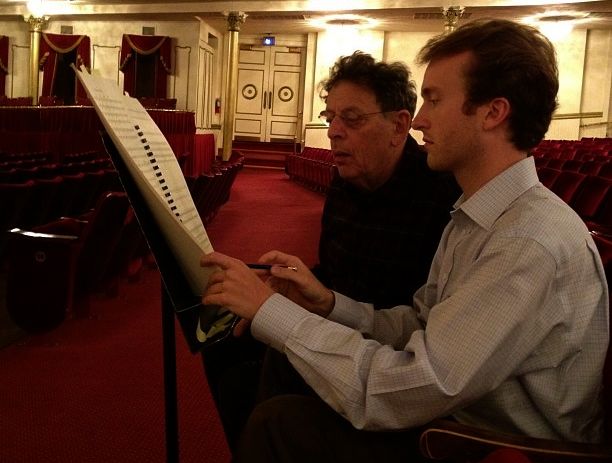
And all the more reason why this week gave me such a buzz. The experience was only amplified by the fact that Philip is a gregarious and charming human being. A big part of my job this week was to interview him publicly, and let me tell you, that guy’s a talker. If Charlie ever had him on the broadcast, he wouldn’t be able to get in a word edgewise (which, perhaps, is why Mr. Glass has never appeared.)
I’ll admit that I was a little put off when I first received the score to the concerto about a month ago, and I found out that the music for his new piece was not actually new — it turns out that the concerto is a condensation of his score for Naqoyqatsi, the third installation of Glass and Godfrey Reggio’s Qatsi Trilogy. But the thing is, everyone involved treated it like it was a brand new piece of music, and because of that, it became a new piece of music.
Much of that had to do with the collaborators involved, Matt Haimovitz and Dennis Russell Davies. Now, when I said at the top of this post that I got to work with ‘several of my musical idols,’ DRD was definitely included in that mix. My obsession with him also dates back to my first year of college, when my eyes were opened to the greater world of new music, and I eagerly began buying up recordings of Schnittke, Pärt, and Glass among others. So many of the albums featured Dennis Russell Davies as conductor that his became a household name in the house of my brain.
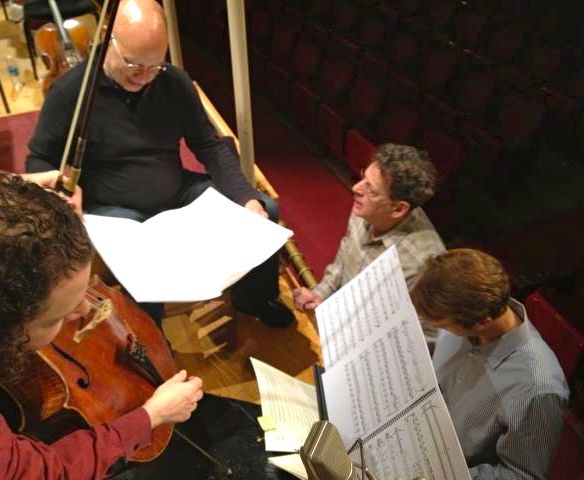
Ahh, just thinking about these people gets me all in a tizzy, but I want to emphasize that the best part is that they were all really dedicated to this project (especially Matt Haimovitz who became one of my musical idols after working with him), they all contributed ideas that made it work, and, what made it so fulfilling on a personal level, they actually listened to and incorporated my ideas — little old me, the assistant conductor. That’s a rarity for artists who don’t even approach these guys’ stature, and it was an honor to contribute what little I did.
But wait, there’s more!
Because when I said that earlier that Cincinnati felt like the center of the music world this past week, it wasn’t just because I got to hang out with famous people. The seventh annual MusicNOW Festival took place, organized by Cincinnati native Bryce Dessner. He collected, among others, the following musical entities: eighth blackbird, Nico Muhly, James McVinnie, Sam Amidon, and no less a deity than Sufjan Stevens.
Sufjan was premiering a new song cycle co-composed with Nico Muhly and Bryce Dessner himself. The one bummer of my week is that I couldn’t get over to hear this collaboration (since I had to be next door attending to the recording of the Glass concerto).