You guys, does anyone else think it’s weird that Valery Gergiev is dressed like a trucker in the Leningrad Denny’s (Денниз) at 2:00 am? I mean, I know that the whole unkempt look is like, his thing or whatever, but come on, baseball cap? Really? And doesn’t it just make his already eccentric Fluttering Butterfly conducting moves look even more bizarre?
Meanwhile, Gautier Capuçon looks like a contestant in a River Phoenix/Johnny Depp lovechild lookalike contest. It’s all about contrast, people.
Question Group the second is all about why won’t La Piel Que Habito just open already, in this country, in my city, NOW?
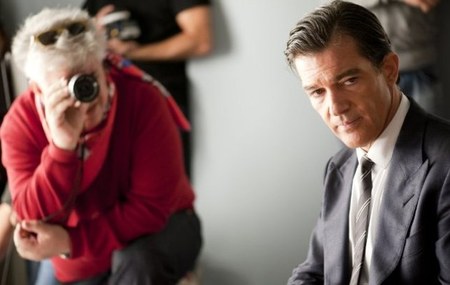
Pedro Almodóvar is the reigning king of the cinema. I mean, is anybody seriously going to dispute that? There are other great directors out there, but Almodóvar consistently writes, directs, and releases a new film almost every other year that maintains or raises his already incredibly high standards. Each one explores similar themes, re-intermingled and re-imagined, so that they all have that Almodóvar stamp and are all so completely different.
And yet, we have to wait months and months after the European premier of each new film to see it in the U.S. Not only is this the best art that we have available to us IN THE WORLD, but this movie has Antonio freaking Banderas in it. Who wouldn’t like that?
There were all these rumors that La Piel was going to be different, that they were going to release the movie all over the world at the same time, something about the Spanish government not enforcing international copyright law and blah blah blah just give the movie, alright??
So now the movie just opened in Britain, strangely enough before the Sept. 2 opening in Spain (um, what?). And then it’s only being released in New York/LA on October 14 or something? Ugh! Just bequeath it unto the world, Pedro! We will love you for it heartily.
In the meanwhile, you can watch more, and listen extensively. A little Alberto Iglesias goes a long way to calming down my frazzled nerves, y’all.
and follows it with a theme representing the masq’d ball itself, which sounds like this:
and then he combines the two themes together (which sounds like this:)
Those are all great reasons to love Hector Berlioz, but the best reason is that, at the spot in the score where he overlays the two themes, he actually wrote these very words and had them typeset and printed in the published score
so that noone would miss this masterful stroke of compositional prowess and fail to recognize his genius. Forget the fact that the art of counterpoint was well over 700 years old, and that people like Bach and Tallis had composed far more complex contrapuntal textures simply for the Grace of God — no, M. Berlioz did what every other composer wishes he had the cojones to do, and let you know exactly how good he was, in three different languages.
I’m writing from a place called Matamoros, PA, because my car just broke down in nearby Port Jervis, NY. If I were to walk a mile away from my hotel room (and trust me, I am not) I would come to the exact place where Pennsylvania, New Jersey, and New York share a border. I can’t vouch for the details, but one intuits very quickly in the Matamoros region that one of these three states does allow fireworks while the other two do not, because there are some serious firework emporia up in this neck of the woods. There are also approximately five hundred ‘cigaret shoppers’ here, so if anybody needs like 20 cases of Camel Lights, just send me a text.
I’m coming from Hancock, ME and heading to Cincinnati, OH. I just spent another fruitful 6-week stint at the Pierre Monteux School for Conductorz & Orchestra Musicianz playing the viola, conducting the orchestra, running seminars, swimming in lakes, eating lobster, etc. I got to premiere a new piece, a narrated viola concerto about Cinderella with my super cool friends Maija and Matt (violist and narrator, respectively). We played to a sold-out house bethrong’d with little kids who were like SO into it. Then I wrote the score for my friend Will‘s new movie. It was a crazy time.
[I should mention that the above cover page was drawn by my super cool and incredibly talented friend Anna who, by no coincidence, happens to be with me in Matamoros, PA and is being a total trooper about this whole car issue.]
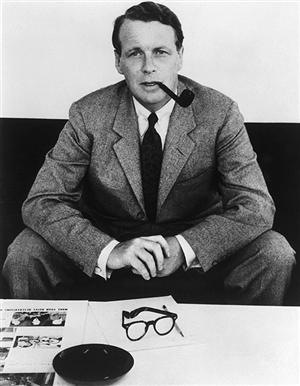
One of the perks of my position at the PMS is that I get a charming little house in the cutest village in Maine all to myself. The house was built over a hundred years ago by a ship’s captain, but the family that still owns it descends from one Frank Olmstead, who apparently ran the advertising department for Kellogg’s cereals in the 1930’s and ’40’s or something like that. I don’t know exactly what he did, but there’s a copy of David Ogilvy’s Ogilvy on Advertising floating around the house, which I’ve now read no less than four times, and which I must recommend to everybody.
And then there’s the vintage 1930’s and 40’s adds hanging on the walls around the house. Let’s just say, I think the buying public had a very different response to visual stimuli 70 some years ago. For example, this ad, which hangs just above my summer sink, is in fact TERRIFYING:
These little girls are at least 3,000 times more frightening than the Children of the Corn and the twin girls from The Shining combined. I would never attempt to sell a breakfast cereal – or, in fact, any consumer product – with their images. Here is the headline on the top of the ad:
which I can only presume replaced the original headline, “All in Favor, Summon Your Inner Daemonry!” I mean, look at this little girl – LOOK AT THIS GIRL:
I have now spent a sum total of four and one half months of my life waking up every morning and having this little girl stare me in the face as I prepare my morning repast. No wonder I switched to toast for breakfast.
I normally try to ignore the random angry missives sent to me from cyberspace, but every once in a while I get to feeling kind of frisky and internet-bellicose. So here goes nothing:
In May of 2009, a piece of mine was released on a CD. The album was reviewed rather favorably in the press, including a review in Fanfare Magazine by a contributor named Jerry Dubins. The album included a piece by a colleague of mine, one Egon Cohen.
Mr. Dubins’ wondered about Egon’s piece,
why a young, Jewish composer would be drawn to this deeply Roman Catholic 13th-century sequence that meditates on the suffering of the Virgin Mary. Surely, as Rochberg and many other Jewish composers have, Cohen might have found an equally moving text from the Hebrew liturgy.
I took issue with this comment on my blog, because, well, it just doesn’t seem like a germane thing for a music critic to second-guess a composer’s choice of text based on nothing more than an assumption about the composer’s cultural or religious identity. I wondered if Mr. Dubins would lodge such a complaint against Mendelssohn’s Christus or Max Bruch’s Kol Nidrei on the same grounds.
Well lo and behold, because the internet is a crazy place, TWO YEARS LATER, I get an e-mail in my inbox from one Jerry Dubins. He writes:
Well um, excuse me, Mr. White. But Mendelssohn did write a very popular oratorio based on the biblical story of a Hebrew prophet. The work is called Elijah. But then I’m sure you already knew that, which is why your question makes no sense.
Right, so a) you are excused, b) yes I did know that, and c) I’m pretty sure you missed my point entirely, so let’s see if I can clarify:
A music critic’s job is to review the music that a composer did in fact write. You might begin by trying to figure out what the composer set out to accomplish in his or her piece. Then you might ask if he did it well. You might try to describe the experience of listening to this music on a visceral or intellectual level.
This particular review involved a vocal work, one in which a pre-written text was set to music. So yes, the composer’s choice of text is a perfectly valid compositional element to comment upon. It’s essential to the composer’s work.
Now, if you feel that the composer did not do justice to the text that he chose, so be it. If you have cause to suspect that the composer’s personal background may have adversely effected his setting of the text, we get into a little bit of a danger zone, but there could still be valid room for criticism. There’s a lot to be said, for example, about the fraught relationship between Mahler’s Jewish heritage and later conversion to Christianity and how that affected his music. It is a well-documented subject and one rife with interest.
In his review, Mr. Dubins suggests that Egon ought to have found a suitable Hebrew text to set simply because he (Egon) is Jewish. Actually, since I’m assuming that Mr. Dubins never interviewed Egon, it’s more likely that he assumed Egon was Jewish because of his name.
Is this really the purview of the music critic? Mr. Dubins states in his review of Egon’s piece that,
The music effectively captures the doloroso character of the text.
So, that’s great then! That’s music criticism. Not very insightful music criticism and not very much of it, but music criticism all the same. Speculations about the source of another text that the composer might have chosen instead is not music criticism, and it doesn’t belong in a magazine purporting to publish the same. If Egon’s piece ‘effectively captures the doloroso character of the text,’ what does it matter if he is a Jewish, Catholic, Hindu, or Lithuanian Orthodox composer?
In regards to Mr. Dubins’ point about Mendelssohn’s Elijah, I’m not sure I quite get it. Is he implying that, because the Jewish-heritaged Mendelssohn also wrote an oratorio on a Hebrew subject, he earned the right to compose another one on a Christian subject? That doesn’t exactly make sense to me, but when logic’s off the table, it’s hard to figure out what’s going on.
Last week was a deusy – I was in Montreal Monday night through Wednesday morning for a Conducting Competition. A conducting competition is this thing where you fly to a semi-foreign country, walk around said country for 8 hours, show up at a pre-determined location in said country at 5:00 pm, wave your arms in front of 2 pianists for 5 minutes, thankfully run into an old friend, and go out together for a great dinner afterwards. That’s what a conducting competition is.
Par contre, if you go into the classier districts of the town, the people speak a much cleaner, more metropolitan version of the language, and they are glad to speak in their native tongue. So, good for them.
The bilinguistic situation does cause some unintentional humor (see above). I mean, if I’m French, do I really need to see the word “Hôtel” underneath the word “Hotel” to know where the hotel is?
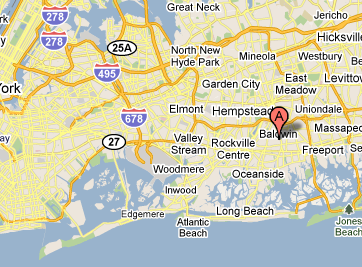
The second part of the week I spent in New York – Baldwin, Long Island, to be precise. I was there conducting a premiere of a piece that I wrote for my friend Scott, who runs, hands-down, one of the best high school music programs in the country. What’s even cooler is the fratty atmosphere that he cultivates in his department. The students play well, hang out, and just really get into music.
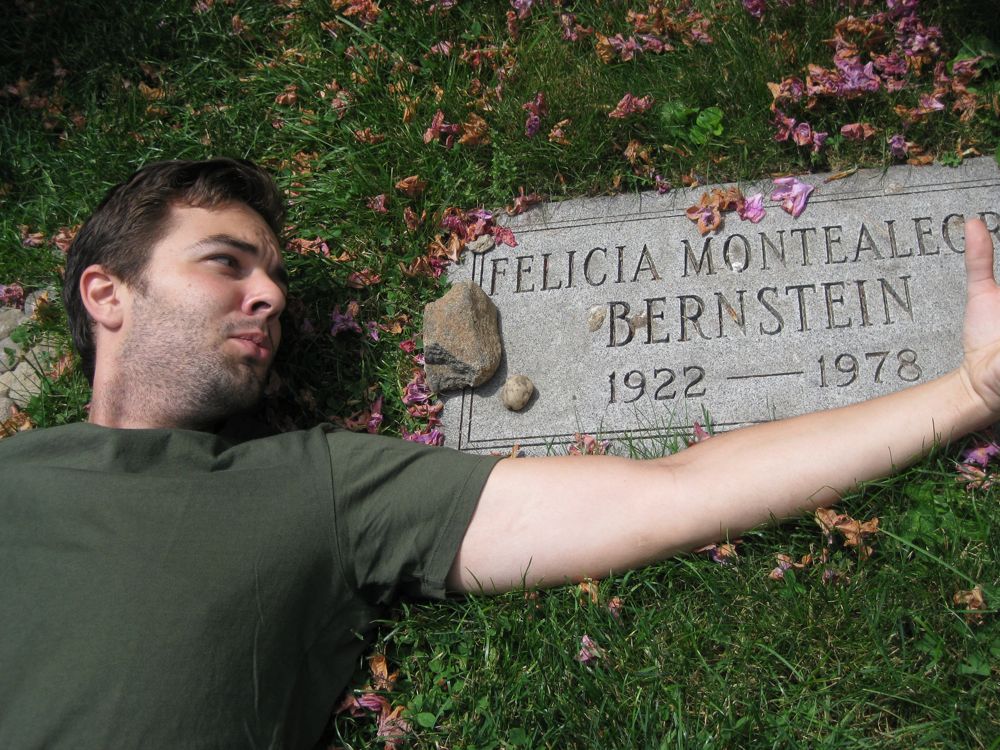
But no trip to New York would be complete for me without a pilgrimage to the grave of Leonard Bernstein. He’s buried in Green-Wood Cemetery (which, should be noted, has a surprisingly hipper-than-I-would-have-thought web site). It’s a gorgeous location, somewhat deep in the heart of Brooklyn.
This was my fourth such trip, but the third accompanied by my friend Eric Benson. We usually make a day of our excursion to the cemetery – Sunset Park is a great place to get Vietnamese sandwiches – and revel in taking pictures of ourselves in semi-erotic poses at the grave site:
I always bring a single red rose for Lenny – it savors more of the jilted lover than a bouquet. I also make it a habit to move one of the rocks on Lenny’s tombstone to Felicia’s, because honestly, it’s the least she deserves.
This was a special trip to Green-Wood though, because Eric and I stumbled upon one of the ponds that dot the cemetery grounds. Now came the big surprise – there were four 50 lb. snapping turtlesswimming in the pond!!
These turtles were sufficiently Mothra-esque to give one pause, living as they were at a cemetery. But then the fauna just got weirder, because we went to another pond, and met the most Lynchian duck of all time. This one little duck was all alone by itself, just walking around. It quacked its beak off to get our attention:
It seemed to be telling us something – like it wanted us to follow it!
It perched itself on the edge of the pond,
and then dove into the water!
Which was where we drew the line (for the obvious reasons – I mean, that has got to be the scummiest pond in Christendom.) OK, so a duck dives into the water. But the quacking. I cannot understate the poignancy and urgency of the quacking. I have never met a duck that seemed to have such an agenda. I think there is something going on with the fauna at Green-Wood Cemetery, and this duck wanted us to know about it.
Unfortunately, it was quacking in Canadian French.
What’s interesting about the two projects is that while they are about same man, they focus on different aspects of his life. Damast’s film is about the famed composer organizing “illegitimate daughters of courtesans” and training them to become an orchestra that eventually played for the Pope. Riggen’s take will be of a more personal nature, focusing on Vivaldi’s side career as a Catholic priest and the conflicts that it caused with both his music and the woman he loved.
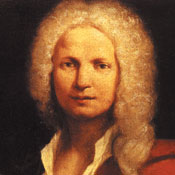
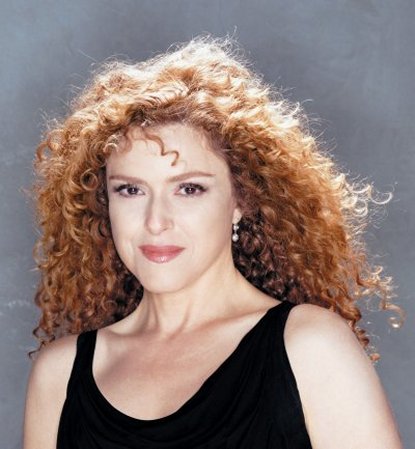
OK, y’all – dream casting time. Who should play Antonio Vivaldi, the famous “red-headed priest” of the 18th century?
Tilda Swinton
Bernadette Peters
Cynthia Nixon
I mean, seriously, has anyone ever seen a picture of this composer wherein he did NOT look like a woman?
Since the trumpet is the major feature of this week’s concert, which features the brilliant playing of CSO principal trumpeter Christopher Martin, I thought we might take a further look at the history of the instrument and why there are so very few trumpet concertos in the repertoire.
Ancient Trumpets
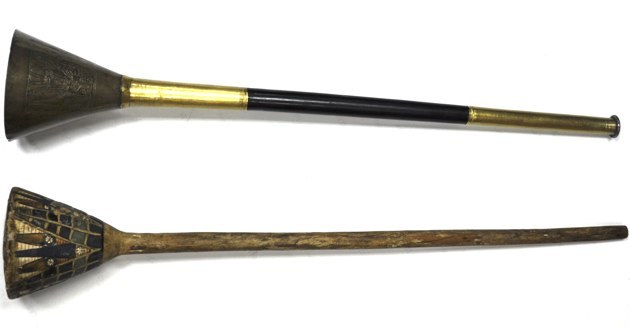
Trumpet were in use at least 3,500 years ago, and from there earliest days, they had a regal association. How do we know? Well, two of the earliest trumpets that we have come from the tomb of King Tut. They were played on a special broadcast by the BBC in the 1930’s:
Notice that each of those trumpets sounds about three or four notes. This is an inherent physical property of the trumpet – and of any vibrating body, really – that without recourse to keys or valves, it is limited to the notes of the harmonic series. So for an awfully long time, trumpets – even of the European variety – were limited to sounding about five notes with any consistency. Hence the very familiar sound of the trumpet fanfare.
Clarino Playing
Around the time of Bach, however, some very diligent players developed a technique known as “clarino” playing. This takes advantage of the fact that the higher up you play on the trumpet, the more notes become available. The ascent in pitch is a perilous one though: the higher the note, the easier it is to crack, slip, or outright miss. The practice of clarino playing lasted from perhaps the High Renaissance to the High Baroque, and it is a fortuitous fact of history that it coincided with the lifespan of one Johann Sebastian Bach.
Because of this, we are left with such gems as the second Brandenburg Concerto (check out the third movement which starts at about 3:40):
Nota bene, the group playing above is called the Freiberger Barockorchester, a so-called “period instrument” ensemble. However, there’s a dead give-away that the trumpeter here is playing on a modern recreation of a trumpet from Bach’s time rather than an original instrument. Do you notice little holes that the trumpeter covers with his fingers while he plays? Those little finger holes are a modern improvement that allow the trumpeter to play the high notes more in tune, and they are not an original feature of the trumpets of Bach’s time.
Now, make no mistake – the bearded gentleman above is a complete virtuoso, and he is in fact using the very same clarino technique that was used by the players of Bach’s time. This little enhancement simply makes the notes sound more mellifluous to the ears of the Auto-Tune Generation.
[Full disclosure: There is significant debate about just what sort of instrument Bach composed this part for. Some people think it was a written for a more horn like instrument. Toscanini, for some reason, had it played on a piccolo clarinet.]
The Keyed Trumpet
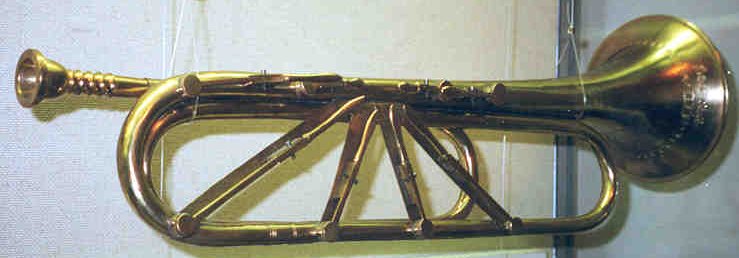
The first step towards the modern valve trumpet was an endeavor called the “keyed trumpet”, invented by (or perhaps, for) the great Anton Weidinger, trumpeter of the court orchestra of Esterházy family, who also happened to employ one Franz Joseph Haydn. So it’s no surprise that Haydn himself wrote the first major piece for this new instrument, his Trumpet Concerto in E-flat Major. Incidentally, this is also the first major concertate piece for the trumpet that is still played today (excepting Bach’s second Brandenburg Concerto).
[Like all esoteric brass instruments, the keyed trumpet has a major following in Britain. This web site is sort of amazing – whoever wrote the text of the front page did everything in his or her power to make you follow the link to the rest of the site.]
The keyed trumpet never gained traction, despite the concertos written for Weidinger by Haydn and his successor at the Esterházy court, Johann Nepomuk Hummel. The instrument was said to have sounded like a “demented oboe”. The English trumpeter Crispian Steele-Perkins, one of the few contemporary champions of the instrument, does at least as well as that in his recording of the Haydn Concerto:
The Cornet
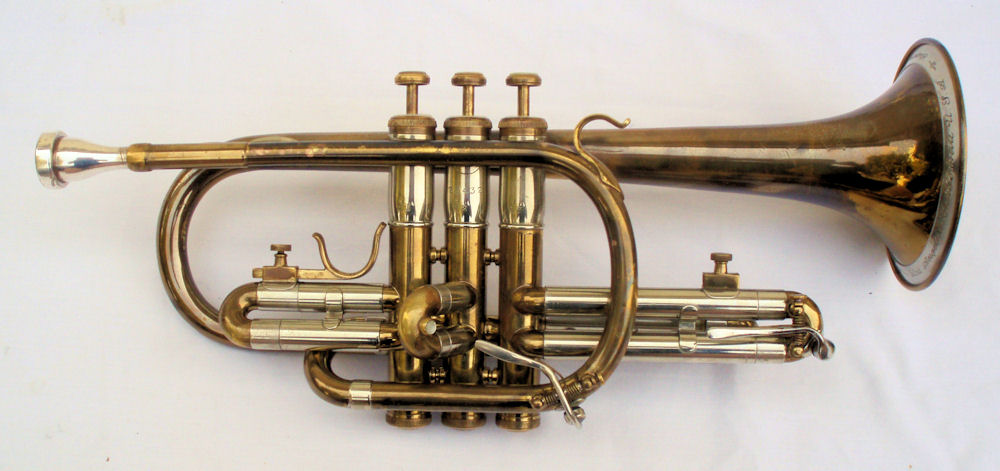
The modern trumpet is really an amalgamation of the old trumpet and the piston cornet. The cornet is a slightly obsolete instrument now – most listeners can not distinguish its sound from that of the modern trumpet. Earlier in the past century though, before trumpets were regularly made with valves, the cornet was a highly prized virtuoso instrument. Hence the dazzling solo that Igor Stravinsky wrote for it in his 1911 ballet Petrushka:
This blog hasn’t had a game in a while, so it’s time for everybody’s favorite: Is it Schnittke OR Sondheim?
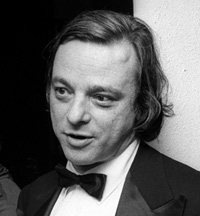
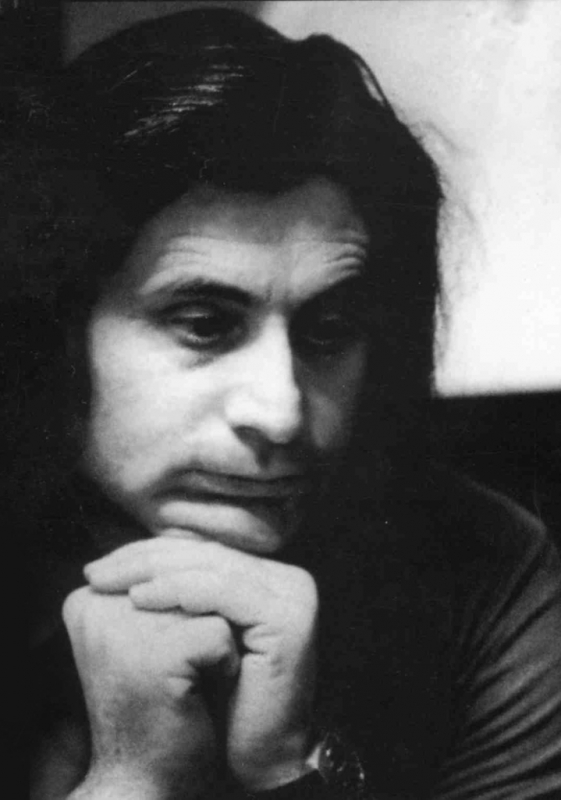
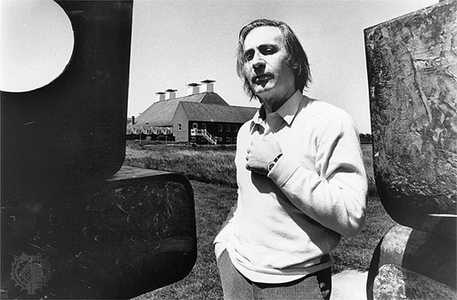
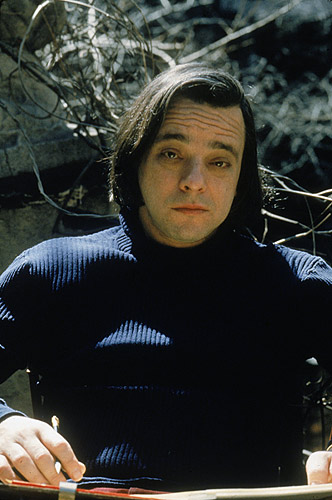
See, Stephen Sondheim was born in 1930 and became the USA’s greatest composer. Alfred Schnittke was born in 1934 and became the USSR’s greatest composer. They both lived and worked in the 1970’s. It was during that decade that they both rocked the exact same, shoulder-length straight hair cut:
Osvaldo Golijov is the composer of such blockbuster classical hits as The Dreams and Prayers of Isaac the Blind and the toe-tapping Pasión según San Marco:
Mr. Golijov’s pieces often have more the flavor of an ethnomusicological exploration, which makes a certain amount of sense for a composer of Argentinian birth who grew up on klezmer and tango and who has also lived in Israel and the U.S. [Although, is it really ethnomusicological if it’s actually your ethnicity? Discuss.]
Anyone who attended Thursday’s lecture was privy to insights from the work’s dedicatee, Mr. Henry Fogel. Boosey & Hawkes has provided an equally enlightening interview with the composer about the genesis of the work. You can listen to the work online in a performance conducted by Mei-Ann Chen (who gave the première in October 2010 in Memphis) with the New England Conservatory Philharmonia. Also of note is Mr. Golijov’s growing filmography since becoming the go-to composer of Francis Ford Coppola.
Lest there be any confusion, the title of Mr. Golijov’s latest work, Sidereus, is in no way meant to sound like an hilarious mispronunciation of the next composer on the program.
Jean Sibelius (1865 – 1957) Violin Concerto in D minor, Op. 47 (1903, rev. 1905)
Sibelius’ violin concerto is far and above my favorite work in the genre, and one of my favorite works by the composer. In fact, it’s one of the first pieces that got me into classical music. You can view an introduction to the work here by the violinist Ida Haendel, who actually received a letter of appreciation from Sibelius after he had heard her performance of the work, and whose Wikipedia entry actually says the following:
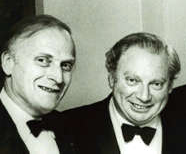
She has the reputation of being as accomplished and brilliant a violinist as Yehudi Menuhin and Isaac Stern; but has said that had she been more photogenic, she would have been as famous.
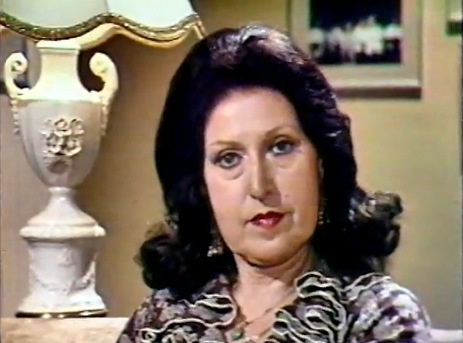
Ida Haendel
Yehudi Menuhin and Isaac Stern, two violinists who Ida Haendel was not as attractive as
People sometimes said the same thing about Sibelius himself, but never to his face (see above).
But seriously folks, if you’re really into the Sibelius concerto, it’s worth your 10 bucks to invest in Leonidas Kavakos’ recording of the 1903 and 1905 versions of the work. He is still the only artist to record the 1903 version, due to the Sibelius family’s wishes, which is pretty impressive. He is also way, way hotter than Ida Haendel.
You’ll get to hear the intricate, Bach-like second cadenza that Sibelius later cut from the first movement of his concerto:
amongst many other interesting tidbits.
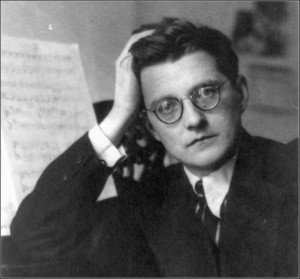
Dmitri Shostakovich (1906 – 1975) Suite from Lady Macbeth of the Mtsensk District
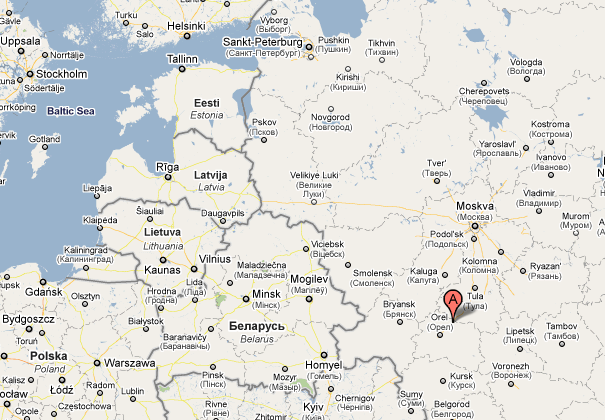
OK, first of all, if you’re anything like me, you’ve always wondered just where IS the Mtsensk District. It’s here:
Shostakovich’s troubles with the government began in the year 1936, at which point Joseph Stalin, eager to send a message to the artistic community, denounced Shostakovitch’s opera Lady Macbeth of the Mtsensk District as immoral and anti-soviet. Let’s watch a bit of the opera and see if we can spot anything that Stalin may have found objectionable. Remember to look very closely now:
At first glance, it looks pretty tame, but that Stalin always had a fine eye for detail. Anyhoo, that led to this very famous headline from the Soviet newspaper Pravda:
which roughly translates to “Muddle instead of Musicâ€, and which began a nightmarish 20 year period of heavy government repression and scare tactics aimed at keeping Shostakovitch in line.
I’d like to recommend two more valuable resources pertaining to Shostakovich’s music and life:
The first is the audio guide to chapter 7 of Alex Ross’s phenomenal book, The Rest is Noise. Even if you haven’t read the book or don’t have a copy handy, the audio guide gives you a nice synopsis of the chapter on music in the 1930′s and 40′s USSR.
The second is an article by everybody’s favorite Slovenian Marxist-Lacanian-psychoanalytic philosopher, Slavoj Žižek, entitled “Shostakovich in Casablanca“. In this article, Žižek compares Soviet repression of classical music to the Hollywood Hays code, in terms of what the censors expected and how an artist was meant both to abide by the code and simultaneously to circumvent it. He posits that Shostakovich found whatever success he could with the Soviet regime because he understood this Janus-faced censorship, whereas Prokofiev just couldn’t figure it out.
This concert featured pieces by four composers who were all innovators in the areas of harmony, orchestration, musical form, and music-drama. Here’s some examples of what they did and where they came from:
Carl Maria von Weber (1786 – 1826)
Below is the first part of the famous “Wolf’s Glen” scene in Der Freishchütz. Note Weber’s use of low, dark orchestral string colors and demonic shrieks from the woodwinds to represent cavorting with dark powers in this eerie space. The arrival of Max, the young gamesman, is accompanied by bright horn calls, our constant reminder that he is a man of the hunt.
[The production below, overall, is pretty cool and certainly very striking. If you are easily offended by rabbit pornography, however, I’d recommend skipping 1:40 – 1:50.]
Hector Berlioz (1803 – 1869)
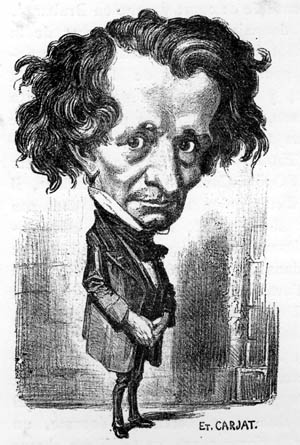
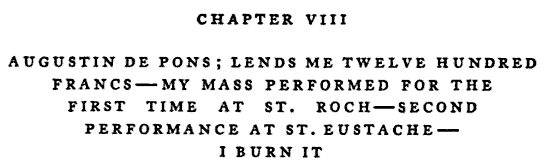
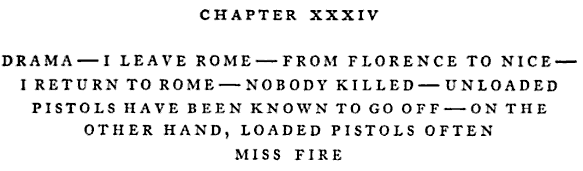
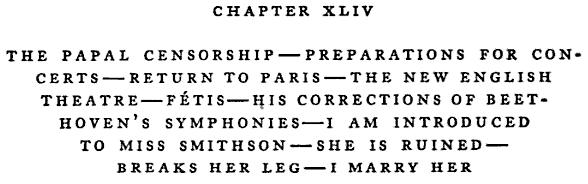
The best part about researching 19th century composers is getting to read their own writings. This is especially true in the case of Berlioz. Never has there been or will be a more over-the-top, extravagant musician or man, prone to bouts of depression and, especially, exaggeration. Berlioz’s Memoirs make for immensely entertaining reading, and I recommend them highly. All you have to do is look at some of the chapter and page headings:
—
—
—
—
Berlioz’s memoirs take us back to a time when artists still presented themselves passionately, vividly, fearlessly. In recent times, this seems to have gone out of fashion.
Richard Wagner (1813 – 1883)
The Civic Orchestra concert included the little known Wagner work Eine Faust-Ouvertüre. Another work dating from around the same period (1839 – 40) is the overture Wagner wrote for the German playwright Guido Theodor Apel’s Columbus. Here’s what it sounds like:
Wagner presented this piece on a concert that was attended by Berlioz. He writes in Mein Leben about the experience of presenting this work in Paris:
One great objection was the difficulty of finding capable musicians for the six cornets required, as the music for this instrument, so skillfully played in Germany, could hardly, if ever, be satisfactorily executed in Paris. I was compelled to reduce my six cornets to four, and only two of these could be relied upon.
As a matter of fact, the attempts made at the rehearsal to produce those very passages on which the effect of my work chiefly depended were very discouraging. Not once were the soft high notes played but they were flat or altogether wrong. In addition to this, as I was not going to be allowed to conduct the work myself, I had to rely upon a conductor who, as I was well aware, had fully convinced himself that my composition was the most utter rubbish – an opinion that seemed to be shared by the whole orchestra. Berlioz, who was present at the rehearsal, remained silent throughout. He gave me no encouragement, though he did not dissuade me. He merely said afterwards, with a weary smile, ‘that it was very difficult to get on in Paris.”
Arnold Schoenberg (1874 – 1951)
Schoenberg is so well known both by lovers and haters of 20th century modernism as its radical founding father, that it’s interesting to remember his firm grounding in the Wagnerian Romantic tradition:


















 Osvaldo Golijov (1960 – )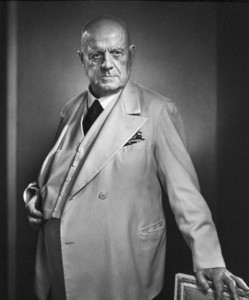



 —
—